The Grampians Peaks Trail is a challenging 164 km, Grade 5 long distance hike through Grampians National Park in Victoria. Completing the full end to end journey typically takes around 13 days and requires a high level of fitness, careful planning, and experience hiking in rugged terrain.
Grampians National Park, also known as Gariwerd, holds deep cultural significance for the Traditional Owners of the land. For thousands of years Aboriginal people have cared for Country here, maintaining a strong connection to the landscape that continues today. The park contains one of the richest concentrations of Aboriginal rock art sites in south eastern Australia and remains an important cultural landscape.
The trail stretches from the northern trailhead at Mount Zero to the township of Dunkeld in the south, linking the rugged sandstone ranges that form the backbone of the park. Along the way hikers traverse exposed ridgelines, climb prominent summits including Gar (Mount Difficult), Mount William and Mount Abrupt, and pass through a wide range of landscapes from dry northern escarpments to forested southern ridges.
Purpose built hike in campgrounds allow the journey to be completed in manageable stages. These camps provide a place to rest after long days of walking across rocky slabs, steep stair climbs and narrow ridgelines.
While the full traverse is one of Australia’s most rewarding long distance hikes, it is also demanding. Many sections involve sustained climbs, exposed terrain and uneven rock surfaces that require careful footing. The trail is divided into northern (N1 to N4), central (C1 to C5) and southern (S1 to S4) sections, allowing hikers to tackle shorter sections or complete the full end to end journey.
Grampians Peaks Trail Full Traverse Itinerary
Day 1: Mt Zero to Barigar Hike-in Campground
Distance: 12.1 km | Grade: 4
The trail begins at Mount Zero Picnic Area on the northern edge of the park. From the outset the route climbs onto rocky ridgelines that provide wide views across the Stapylton Amphitheatre and the surrounding sandstone ranges.
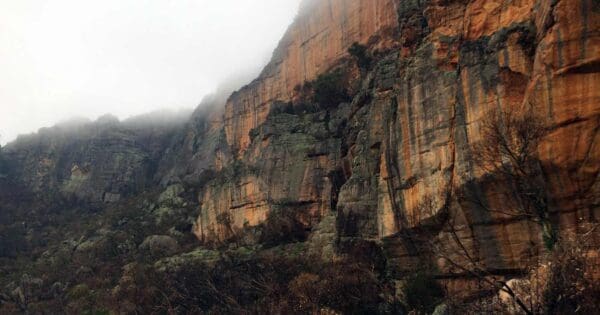
The track winds across open slabs and between large boulders as it circles the base of Mount Stapylton. Along this section hikers can look out toward the sweeping orange face of Taipan Wall and the distinctive formation known as Bird Rock. Seasonal rockpools and small waterfalls may be present after rain.
After crossing Golton Creek the trail continues toward Coppermine Track before climbing briefly onto exposed rocky battlements. The route then descends across open rock slabs dotted with boulders and small pools before dropping steeply toward Barigar Hike in Campground.
Safety information
- Serviced water tanks at Mt Zero Trailhead and Coppermine Track Crossing
- Rainwater tank at Barigar Hike in Campground
Day 2: Barigar to Gar Hike-in Campground
Distance: 11.3 km | Grade: 4
Leaving Barigar, the trail climbs steadily through grassy woodland and Yellow Box forest toward the western slopes of the Mount Difficult Range. A final series of stone steps leads onto a ridgeline with views across the surrounding ranges before descending briefly to Roses Gap Road.
From here the track follows Dead Bullock Creek and begins a sustained climb up the imposing escarpment of Gar, the highest peak on the western side of the range. The trail zigzags upward on steep rocky steps beneath towering rock walls and near exposed cliff edges.
Seasonal waterfalls can appear along the escarpment after rain. The climb eventually reaches Gar Hike in Campground, perched high on the range.
Safety information
- Rainwater tanks at Barigar and Gar Hike in Campgrounds
- Serviced water tank at Gar Trailhead (Roses Gap Road)
Day 3: Gar to Werdug Hike-in Campground
Distance: 14 km | Grade: 4
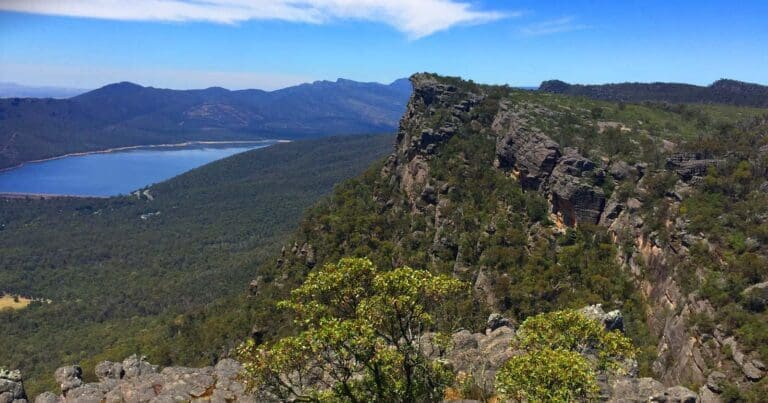
This stage follows the ridgeline around the horseshoe shaped mountain range that surrounds Lake Wartook. The track rises and falls across high points and shallow saddles as it travels across the back slopes of the Mount Difficult Range.
Sections of open rock slab and exposed ridgeline provide wide views across the Lake Wartook basin and the surrounding mountains. The trail eventually descends toward Long Gully Creek before climbing again to Werdug Hike in Campground.
The campground sits on a high knoll with clear views down toward the lake and across the western side of the range.
Safety information
- Rainwater tanks at Gar and Werdug Hike in Campgrounds
- Serviced water tank at Mt Difficult Road Crossing (North)
Day 4: Werdug to Halls Gap
Distance: 13 km | Grade: 4
From Werdug the trail climbs toward Lake Wartook Lookout, one of the highest points along the Mount Difficult Range. The track then meanders along the escarpment past rocky gardens before descending steeply on stone steps.
This section marks a noticeable change in vegetation. The dry rocky terrain of the northern ranges gives way to the taller forests and wetter slopes on the eastern side of the park. Birdlife is often abundant in these sheltered valleys.
The route continues through forest toward Chautauqua Peak before descending past Clematis Falls and through the Grampians Botanic Gardens on the approach into Halls Gap.
Accommodation in Halls Gap must be arranged independently.
Safety information
- Rainwater tank at Werdug Hike in Campground
- No serviced water tanks along the trail until reaching Halls Gap
Day 5: Halls Gap to Bugiga Hike-in Campground
Distance: 8.9 km | Grade: 4
Departing from Halls Gap, the trail climbs into the Wonderland Range through a series of striking sandstone formations. Early highlights include Venus Baths and views toward Elephant's Hide and Chautauqua Peak.
The track passes through narrow rock corridors including the Grand Canyon and Silent Street before climbing toward the Pinnacle Lookout. Along the way hikers pass notable features such as the Cool Chamber and Bridal Veil Falls.
Beyond the Pinnacle the trail descends through forest toward Sundial Carpark before continuing through Devils Gap and along rocky slopes toward Bugiga Hike in Campground beneath the cliffs of Mount Rosea.
Safety information
- Serviced water tanks at Sundial Carpark and Bugiga Hike in Campground
Day 6: Bugiga to Barri Yalug Hike-in Campground
Distance: 14.7 km | Grade: 4
This stage begins with a steep climb through tall forest onto the slopes of Mount Rosea. Large boulders and rocky steps lead to the ridgeline of Bugiga mirgani, offering expansive views across the surrounding ranges.
After reaching the summit the trail descends through forest toward Borough Huts, a historic site once used to maintain Stawell’s water supply system. A footbridge crosses Fyans Creek nearby.
The track then crosses Grampians Tourist Road before climbing gently through forest and rocky slopes to Barri Yalug Hike in Campground.
Safety information
- Serviced water tank at Bugiga Hike in Campground
- Rainwater tank at Barri Yalug Hike in Campground
Day 7: Barri Yalug to Duwul Hike-in Campground
Distance: 13.2 km | Grade: 4
This section involves one of the largest elevation gains on the trail, climbing from Barney Creek to the high ridgelines near Redman Bluff.
The track passes remnants of historic water fluming supported by dry stone pillars before descending briefly across the Seven Dials area. From here a steady climb leads to Redman Bluff, marked by an historic cairn.
After descending from the bluff the trail follows a narrow corridor between Mount William Road and the cliff edge before reaching Duwul Hike in Campground.
Safety information
- Rainwater tanks at Barri Yalug and Duwul Hike in Campgrounds
- Serviced water tanks at Redman Road Crossing and Mount William Road
Day 8: Duwul to Durd Durd Hike-in Campground
Distance: 14.5 km | Grade: 4
From Duwul the trail climbs to the summit of Mount William, the highest peak in the Grampians. From the summit hikers can see the Serra Range, Victoria Range and much of western Victoria.
The track then heads south to Boundary Gap before traversing the broad expanse of the Major Mitchell Plateau. The route undulates across rock slabs and steel mesh walkways as it passes First Wannon Creek and several high points across the plateau.
The day concludes with a descent through banksia woodland and open grassy forest toward Durd Durd Hike in Campground.
Safety information
- Rainwater tanks at Duwul and Durd Durd Hike in Campgrounds
- Serviced water tank at Mount William summit
Day 9: Durd Durd to Yarram Hike-in Campground
Distance: 11.9 km | Grade: 4 to 5
This stage descends from the high peaks of the Mount William Range into more sheltered woodland valleys. The terrain includes rugged ridgeline walking and rock surfaces typical of the central Grampians.
The Serra Range dominates the western skyline while farmland and wetlands spread across the plains to the east. These wetlands provide important habitat for wildlife including the Brolga, Australia’s largest flying bird.
Spring brings extensive wildflower displays along this section, including grevilleas and heath species.
Safety information
- Rainwater tanks at Durd Durd and Yarram Hike in Campgrounds
- Serviced water tanks at Jimmy Creek Road Crossing and Jimmy Creek Campground
Day 10: Yarram to Wannon Hike-in Campground
Distance: 11.1 km | Grade: 4 to 5
The trail climbs and descends across a series of rocky knolls and shallow saddles along the southern ridgelines of the Mount William Range. Sections of old growth forest alternate with open heath and low swampland plains.
Views extend west toward the Serra Range and east across farmland and wetlands scattered across the plains. Oyster Bay Pines appear in several sections along the route.
Wannon Hike in Campground sits within a sheltered gully surrounded by reclaimed farmland and ridgelines that provide good sunset viewpoints.
Safety information
- Rainwater tanks at Yarram and Wannon Hike in Campgrounds
- Serviced water tank at Yarram Gap Road Crossing
Day 11: Wannon to Djardji-djawara Hike-in Campground
Distance: 16.3 km | Grade: 4
This is one of the longer stages of the trail. The route crosses open grasslands, swampy flats and sections of steel boardwalk before climbing toward the Serra Range.
The surrounding heathlands provide important habitat for several threatened mammals including the Long nosed Potoroo, Southern Brown Bandicoot and Heath Mouse. Austral grass trees and diverse heath species dominate the vegetation.
After crossing Griffin Fireline the trail climbs onto the Serra Range and follows forested slopes and old growth saddles before reaching Djardji djawara Hike in Campground on a rocky knoll.
Safety information
- Serviced water tanks at Griffin Trailhead, Wannon and Djardji djawara Hike in Campgrounds
Day 12: Djardji-djawara to Mud-Dadjug Hike-in Campground
Distance: 8.1 km | Grade: 4
This shorter stage includes two prominent peaks along the southern end of the range. The trail climbs steeply to Signal Peak across rock steps and boulder fields before descending into forested saddles.
From there the route climbs again toward Mount Abrupt, also known as Mud Dadjug. The summit is exposed and marked by a trig station.
After descending from the summit the trail follows a creek line through eucalypt forest before reaching Mud Dadjug Hike in Campground.
Safety information
- Serviced water tank at Djardji djawara Hike in Campground
Day 13: Mud-Dadjug to Dunkeld
Distance: 14.8 km | Grade: 4
The final stage begins with a steep descent before climbing over Bainggug, also known as the Piccaninny. After crossing Victoria Valley Road the trail begins the final ascent over Mount Sturgeon.
From the summit wide views extend across the volcanic plains to the south and back toward the sandstone ranges of Gariwerd. The contrast between these landscapes highlights the geological history of the region.
A final descent through farmland and open woodland leads into the township of Dunkeld, marking the end of the Grampians Peaks Trail.
Safety information
- Rainwater tank at Mud Dadjug Hike in Campground
- Serviced water tanks at Dunkeld Reservoir Road Crossing and Sturgeon Road Crossing











11 Reviews on “Grampians Peaks Trail Traverse (164km)”
While I found certain aspects of the Grampians Peaks Trail enjoyable, I couldn’t help but feel that one notable aspect was the trail’s lack of remoteness. In comparison to other multi-day hikes we’ve undertaken, where the only way to truly experience the trail was through a multi-day commitment, the Grampians Peaks Trail was accessible for day hikes at all points. This led to frequent encounters with people along the way, and the presence of day trippers exploring the campgrounds, while great to see, diminished the ‘remote’ feeling.
While the tent platforms were a commendable idea, the campsite felt crowded when fully occupied. Having half the number of platforms, more widely dispersed, could have enhanced the overall camping experience and sense of isolation.
I found the communal huts at the campsites to be an unnecessary addition. Personally, I prefer self-reliance while camping and didn’t utilise the communal huts. Some hikers, however, spent their entire afternoon and evening in the huts, which isn’t my preferred way to experience the outdoors. Nonetheless, I recognise that others might appreciate the added comfort the huts provide.
Despite enjoying aspects of the Grampians Peaks Trail, I have reservations about its potential environmental impact. Over the multi-day hike, I noticed increased erosion along the trail, increased litter around campgrounds, and damage to vegetation around the campgrounds and toilets. These observations, coupled with the high number of hikers and day trippers, raise concerns about the trail’s sustainability. While accessibility is crucial, finding ways to balance it with environmental protection is equally important.
The Grampians region boasts stunning views, but ensuring its long-term health requires careful consideration. Managing public lands is undoubtedly a complex task, and I hope we can find solutions that benefit both visitors and the environment.
While the Grampians offer remarkable beauty, those seeking a remote wilderness experience may find the Grampians Peaks Trail lacking. It left me pondering whether staying in Halls Gap and embarking on a few day hikes might have been a more fulfilling option. Acknowledging my limited three-day experience on the GPT, I believe there are better places in Australia for a more remote long-distance hiking experience. Trails such as the Buller Huts Trail, Overland Track, and Larapinta offer a more secluded and authentic experience.
Overall, the Grampians offer breathtaking beauty, but careful considerations are needed for its long-term sustainability. Balancing accessibility with environmental preservation is crucial, and I appreciate the challenge of managing public lands. I hope we can find solutions that benefit both the visitors and the environment in the long run.