Hike at a Glance
Max elevation: 228m
Min elevation: 0m
Total Ascent: 1935m
Hike overview
The Cooloola Great Walk is a challenging but rewarding 102km hike located within Great Sandy National Park, Queensland. Rated as grade 4, this multi-day adventure is perfect for experienced hikers seeking to immerse themselves in the stunning natural beauty of Cooloola for five days.
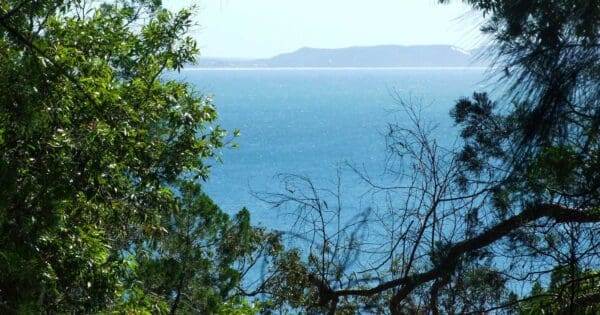
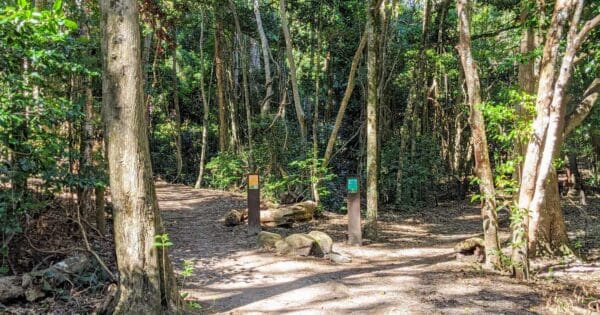
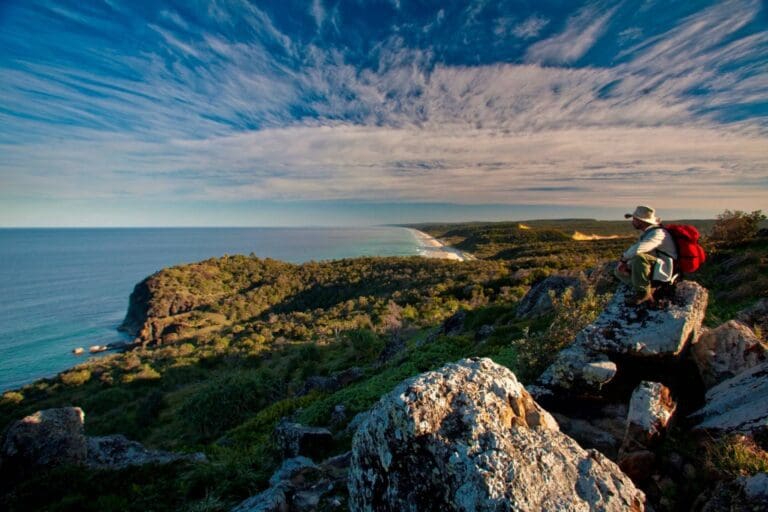
Get ready to be amazed by the park's diverse landscapes. The trail winds through rainforests teeming with life, tall eucalypt forests offering a cool escape, sun-drenched coastal woodlands, and vast heath plains stretching towards the horizon. As you conquer the massive sand dunes, you'll be rewarded with breathtaking views. Keep an eye out for perched lakes, hidden gems nestled amongst the dunes, and long stretches of sandy beaches perfect for a moment of relaxation.
The Cooloola Great Walk offers more than just scenic beauty. The trail weaves its way between the pristine upper Noosa River and the east coast, providing panoramic views of the Cooloola coastline. Keep your eyes peeled for wildlife sightings – you might encounter snakes, skinks, lizards, emus, or even an echidna. Natural lookouts along the way offer stunning vantage points to soak in the surrounding landscapes.
The hike concludes at Rainbow Beach, but the memories you create will last a lifetime. Four designated campsites – Brahminy, Dutgee, Litoria, and Kauri – provide safe havens for you to rest and recharge under the starry night sky, surrounded by the sounds of nature.
Section-by-Section Guide
The Cooloola Great Walk offers a multi-day adventure through the diverse landscapes of Great Sandy National Park. Divided into five sections (S1-S5) with an optional coastal route (S6), the 102km trail caters to experienced hikers seeking a challenging and rewarding experience.
Section 1: Noosa North Shore to Brahminy Campsite (17.3km)
Your journey begins at the Arthur Harrold Nature Refuge, where coastal heath explodes with wildflowers during spring. Ascend the Cooloola sandmass and consider a detour to Teewah Landing for stunning lake views or Mount Seawah for panoramic coastal views. End your day at Brahminy Campsite, where a breathtaking sunset awaits.
Section 2: Brahminy Campsite to Dutgee Campsite (20.3km)
Traverse high dunes through eucalyptus forests, catching glimpses of Lake Cooloola and sweeping coastal landscapes. A hidden patch of rainforest adds a touch of surprise. Navigate the Cooloola Sandpatch, a one-kilometer stretch that rewards you with breathtaking views of the upper Noosa River and hinterland ranges. Descend to heath plains adorned with wildflowers and reach Dutgee Campsite, a cultural site with reflective river surfaces. Remember, climbing the decaying logs here is strictly prohibited.
Section 3: Dutgee Campsite to Litoria Campsite (14.8km)
Bid farewell to the upper Noosa River and admire the sandy extensions of the Cooloola Sandpatch rolling down the distant hills. The trail continues through towering forests, with some steep sections to challenge you. Keep an eye out for Ramsay's Hut, a relic of Cooloola's past timber industry, but be sure to stay on the designated track for safety reasons.
Section 4: Litoria Campsite to Kauri Campsite (20.5km)
Emerge at Lake Cooloomera, a perched lake teeming with "acid frogs." Observe from a distance to avoid disturbing this delicate ecosystem. The trail reaches its highest points, passing through fragrant carrol scrub and pockets of littoral rainforest. Rest your weary legs at Kauri Campsite, nestled on a rainforest ridge and named after the giant kauri pines that drop massive seed cones in late spring.
Section 5: Kauri Campsite to Carlo Carpark (15.2km)
Immerse yourself in the symphony of rainforest birdsong as you head towards Poona Lake, the largest perched lake in Cooloola. While the sight of a white sandy beach might be tempting, swimming is not recommended. Navigate the Carlo Sandblow, taking in the views of Double Island Point and Tin Can Bay. Remember to stay clear of sand cliffs and hang-gliders for safety reasons. Your Cooloola Great Walk adventure concludes at Carlo Carpark, with an option to visit the QPWS information center on Rainbow Beach Road.
For more information on this hiking trail, please visit Queensland.com
Local wildlife safety – K’gari
K’gari is home to a free-ranging population of dingoes, and visitors should follow local park authority advice to reduce the risk of negative interactions. Never feed or approach dingoes, keep children close, and carry a stick or hiking pole to help maintain distance if needed.
While crocodile encounters on K’gari are uncommon, estuarine crocodiles can occur in parts of southern Queensland. Avoid swimming in creeks, lakes, and estuaries unless they are clearly designated as safe, and follow local signage.
Before your hike, review official safety guidance:
Track grade
Grade 4 (Hard) - Challenging Walks for Experienced Walkers: Grade 4 on the AWTGS signifies challenging walking tracks. Bushwalking experience is recommended for these tracks, which may be long, rough, and very steep. Directional signage may be limited, requiring a good sense of navigation. These walks are suited for experienced walkers who are comfortable with steeper inclines, rougher terrain, and potentially longer distances.
Practical information
- The Cooloola Great Walk offers a well-marked path with mostly firm and stable ground. However, some sections will test your endurance.
- Expect steep inclines, soft sand stretches, and areas exposed to direct sunlight.
- Plan your daily hikes strategically by studying topographic maps.
- While navigating the trail, be aware of potential obstacles like fallen tree branches and wild animals.
- You might encounter wet and boggy sections on the track.
- Remember to prioritise safety and adjust your pace accordingly.
Walk map and GPX file
Max elevation: 228 m
Min elevation: 0 m
Total climbing: 1935 m
Total descent: -1858 m
GPX files, maps and content are copyright Trail Hiking Australia. Not to be copied, redistributed or uploaded to other platforms including AllTrails.
Explore safely
Planning this hike? Most incidents develop before you even start. Safe outcomes depend on how navigation, hydration, environment, load and judgement work together. Small oversights can compound quickly in Australian conditions. See how it happens in the Hiking Safety Systems Foundations. Then use the Hiking Safety Systems, planning calculators, and make sure a trusted contact has your trip plan before heading out.
Leave a trip plan
Before you go, complete a trip intentions form and share it with a trusted contact. Agree on a Late-Back Time and ask them to call 000 (Police) if you have not checked in. A clear trip plan is one of the simplest and most effective safety steps you can take.
Planning checklists
Download the hiking preparation and safety checklists before leaving home to help you think through your plans. They help ensure important considerations are not overlooked and support safer decision-making on the trail.
Getting there
Getting to the trailhead: Great Sandy National Park.
The Cooloola Great Walk sits within the Cooloola Recreation Area, which stretches along the coast between Tewantin, near Noosa, and Rainbow Beach, just south of K’gari. Tewantin is around 155 kilometres north of Brisbane, making it roughly a two hour drive, while Rainbow Beach lies about 240 kilometres north of Brisbane, or around three hours by road. These two towns form the main access points for walkers planning to start the track from either end.
The southern trailhead is located at the Arthur Harrold Nature Refuge on the Noosa North Shore, approximately five kilometres from the Tewantin town centre. Access to this area typically involves a short vehicle ferry crossing of the Noosa River, followed by travel along sandy tracks, so a suitable vehicle and some planning are required. The northern trailhead is at the Carlo Sandblow car park, about 1.5 kilometres from the centre of Rainbow Beach. This end of the walk is easily reached by sealed road, making it a popular starting point for those looking to begin their journey through Cooloola’s forests, dunes, and coastal landscapes.
Need a rental car to get you to the hike? Find one here.
Accommodation nearby
Find accommodation close to the trailhead including hotels, cabins, and campgrounds. Use the interactive map to explore available options in nearby towns.
Nearby towns: Cooroy, Fraser Island, Gympie, Hervey Bay, Maryborough, Noosa Heads, Pomona, Rainbow Beach, Tin Can Bay
About the region
Great Sandy National Park stretches along Queensland’s Fraser Coast and protects one of the most diverse coastal landscapes in Australia. Within its boundaries you will find long, undeveloped beaches, towering sand dunes, open heathlands, pockets of rainforest, swamps, freshwater creeks and lakes, and sheltered mangrove forests. The variety of environments packed into this region is remarkable, and much of it feels largely untouched.
The park is divided into two distinct sections. The Cooloola section lies between Noosa Heads and Rainbow Beach and covers around 18,400 hectares. Further north is the K’gari section, which takes in almost the entirety of the world’s largest sand island and spans approximately 56,000 hectares. While both areas share a strong coastal character, each has its own feel and set of experiences.
Cooloola is well known for the Cooloola Great Walk, a five day hiking route that links forests, beaches and inland sand tracks. The nearby Noosa River is popular for canoeing and boat tours, offering a quieter way to explore the park’s waterways. On K’gari, the Fraser Island Great Walk runs for around 90 kilometres and showcases the island’s shifting dunes, lakes and forests. Lake Cootharaba also draws visitors for fishing, sailing and paddling.
Wildlife and outdoor activities play a big part in the park’s appeal. Whale watching, fishing, bushwalking and four-wheel driving are all popular, and the coastline is scattered with reminders of maritime history, including the SS Maheno and the Cherry Venture shipwrecks. One of the park’s most unusual features is found on K’gari, where tall rainforest grows directly out of sand, a rare phenomenon on a global scale. The island is also known for its coloured sand cliffs and a wide range of walking tracks, from short boardwalks to longer routes crossing open sandblows.
Lake Wabby is another standout location and is a favoured spot for swimming and fishing, set against the backdrop of steep sand dunes. Access to both sections of the park generally requires a four-wheel drive vehicle, and vehicles on K’gari must hold a valid permit. Camping areas are scattered throughout the park, allowing visitors to spend time immersed in this distinctive coastal environment rather than just passing through.
Similar walks nearby
Looking for more walks in or near Great Sandy National Park? Try these trails with a similar difficulty grade.
Gallery
Got any photos from this hike? Your photos can help others plan. Share shots from along the trail so fellow hikers know what to expect.
Click to add your photos >>
Suggest an edit
Notice something different about this trail? Whether it’s a new feature, a route change, or a closure, share your update so we can keep our info accurate and helpful for fellow hikers.
Click to suggest edits >>
Acknowledgement of Country
Trail Hiking Australia acknowledges the Traditional Owners of the lands on which we hike and pay respects to their Elders, past and present, and we acknowledge the First Nations people of other communities who may be here today.





5 Reviews on “Cooloola Great Walk (102km)”
A lovely walk 🥰
Suse Jamie on our doorstep ?
Erin Weston
Any suggestion for a hike near Myall Lakes NP ?
Fiona?
Delwyn Davis
Lauren Christian another one for us.
Jane Spence