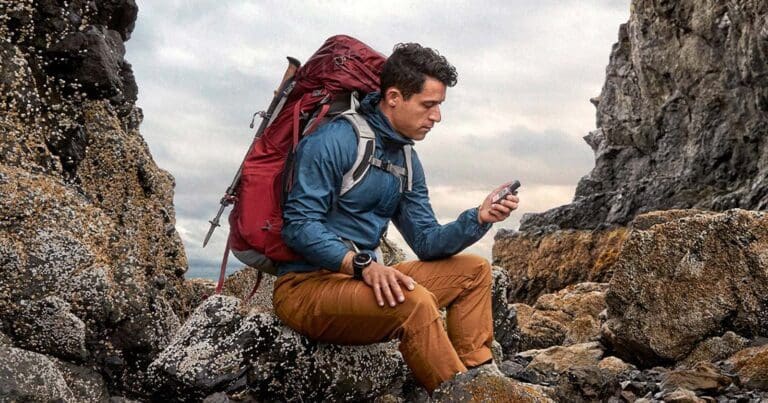
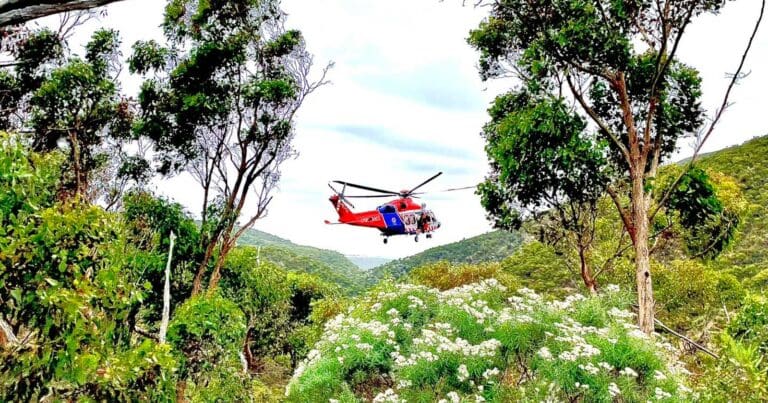
Most hikes go exactly to plan. The reason a survival kit is worth carrying anyway is that when something does go wrong, storms, getting lost, a minor injury that stops you walking, it usually happens faster than you expect, and it’s rarely convenient. A well-thought-out kit is what turns that situation from something you’re improvising through into something you’re actually equipped to manage.
What a kit is actually built around
A genuine survival kit is a system, not a pile of gear that felt useful in the shop. Every item in it should be solving a real problem you could actually face out there, not just filling a category. If you can look at what you’re carrying and explain why each piece earns its place, you’ve got something that works as a system.
Navigation and signalling
Being found matters as much as knowing where you are. A Personal Locator Beacon is the most reliable way to alert emergency services once you’re out of mobile range, and it’s worth treating as the anchor of this category rather than one option among several. A pea-less whistle, something like a Fox 40, has no moving parts to jam and still works wet, which matters more than it sounds like it should the first time a cheap whistle fails on you in the rain. A signal mirror isn’t just for clear days either. A flash from one can be seen for kilometres by a search crew even under overcast skies. A compact compass rounds this category out, since a PLB and a whistle help you get found, but a compass is what helps you avoid needing them in the first place.
Water
Water purification tablets, iodine or chlorine, let you treat water from natural sources rather than relying entirely on what you’re carrying. For storage, anything that reliably holds one to two litres works, a durable folding bottle or bladder, even a cleaned-out wine bladder packs down small and does the job, provided it’s washed thoroughly first to avoid bacterial growth. A small hollow-fibre filter like a Sawyer Mini or LifeStraw is worth the space if you’ve got it, since it purifies quickly without needing to wait on tablets.
Fire and warmth
A reliable firestarter or flint, one that still works wet, is worth prioritising over anything that depends on dry conditions, since fire matters most exactly when conditions have turned against you. Dry tinder to actually catch that spark is easy to forget and genuinely necessary. An emergency blanket or bivvy rounds this category out: lightweight, compact, and built specifically to retain body heat when you’re stationary and cold.
First aid
Band-Aids, gauze and medical tape cover the everyday cuts and scrapes. In Australia, a proper snake bite kit with continuous compression bandages for the pressure immobilisation technique isn’t optional, it’s the standard response here and worth carrying regardless of how remote the hike feels. A set of mini survival cards gives you a quick reference under pressure, when recalling detailed first aid steps from memory is harder than it sounds, and waterproof survival instructions kept in a sealed pouch serve the same purpose. For the specifics of what to actually do once you’re in that situation, the What to Do if You’re Lost guide goes further than a kit list can.
Repair and maintenance
Duct tape wrapped around a trekking pole or water bottle saves space while still giving you enough for a real repair. Needle and thread handle torn gear or clothing. A compact multi-tool, knife, screwdriver, can opener, covers most of what’s left. None of this feels essential until something breaks twenty kilometres from the car, at which point it’s the only thing that matters.
Food
High-calorie, non-perishable food that doesn’t need cooking, energy bars, trail mix, freeze-dried meals, covers the baseline. A basic fishing kit, hooks, line and a few sinkers, gives you an option near water if a situation runs longer than planned. Tea bags are a small thing to add, but a warm drink genuinely helps morale in a difficult situation, and that’s worth more than its weight suggests.
Pocket kit versus pack kit
It’s worth splitting this into two separate kits rather than one. A pocket survival kit, small enough to stay on you if you’re separated from your pack, should hold the absolute essentials: whistle, signal mirror, PLB, a firestarter, and minimal first aid. Everything else, the repair tools, the broader first aid supplies, the food, stays in the main pack. The point of the split is simple. If you lose the pack, you haven’t lost everything.
Training matters as much as the kit
A Remote Area First Aid or Wilderness First Aid course is worth doing alongside building the kit, not instead of it. Knowing when and how to actually use what you’re carrying, and being able to improvise when something in the kit isn’t quite right for the situation, matters as much as having packed the right items in the first place.
Ready to pack? Download the survival kit checklist to work through this systematically before your next hike.
A survival kit is only as good as the thinking behind it, not just the gear list. Pack carefully, split a pocket kit from your main pack kit, and treat the gear as half the preparation. The other half is knowing what to do with it.