On multi day hikes, food becomes a weight management exercise. Carry too little and your energy drops. Carry too much and your pack stays unnecessarily heavy for days before you eat it down.
I’m not chasing minimalism here. It’s about finding the balance between enough energy, decent morale, and a pack that isn’t working against you.
How much food do you need?
Energy requirements vary with terrain, pack weight, temperature, and individual metabolism. Cold conditions increase energy demand. Heat may suppress appetite. Sustained climbing raises expenditure significantly.
For longer hikes of four days or more, I think of dry food weight as falling within one of three practical ranges:
- 800–900 g per person per day allows generous intake, variety, and a comfortable safety margin.
- 700–800 g per person per day is workable with deliberate food selection and good energy density.
- 500–600 g per person per day represents a high-efficiency approach used by experienced hikers who prioritise calorie-dense foods and accept tighter margins.
Operating at the lower end requires:
- High fat composition
- Minimal fresh food
- Careful portion control
- Realistic calorie targets
- A clear contingency plan
These figures refer to dry food weight only.
Fresh food is heavy relative to the energy it gives back. Four average pieces of fruit can exceed 800 g without meeting daily caloric needs.
Energy density matters more than volume.
While cutting dry food weight improves pack efficiency, remember that many lightweight staples such as pasta, rice, powdered milk, and soup need water to prepare. Your daily water audit has to account for the fluid needed to rehydrate these foods, particularly in dry or exposed environments.
Organising food efficiently
For group hikes, planning food centrally reduces duplication and excess weight. Shared cooking improves fuel efficiency and cuts the need for multiple stoves and sets of utensils.
A practical method is to:
- Gather all food for the trip
- Weigh the total
- Divide by the number of person-days
This quickly reveals whether your daily intake sits within your intended weight range. On longer trips, weight saved on food compounds across multiple days.
Worked example: eight days for two people (cool conditions)
Here’s a worked example: food carried for two people over eight days in cool conditions.
Total dry weight equated to 824 grams per person per day. Weights include packaging.
Food breakdown: 8 days, 2 people
| Category | Item | Total Weight (g) | Per Person Per Day (g) | Notes |
| Snacks | Scroggin mix | 3006 | 188 | Nuts, dried fruit, chocolate |
| Confectionery | 186 | 12 | Jelly-style sweets | |
| Muesli bars | 325 | 20 | Compact additions | |
| Chocolate | 238 | 15 | High energy density | |
| Powdered drink mix | 226 | 14 | Vitamin C, flavour | |
| Breakfast | Cereal base | 1078 | 67 | Substitute oats or muesli |
| Powdered milk | 760 | 48 | Increases caloric density | |
| Lunch | Crackers / flatbread | 854 | 53 | Durable carbohydrate base |
| Spread (yeast extract) | 89 | 6 | Small quantity required | |
| Hard cheese | 740 | 46 | Stable in cool weather | |
| Salami | 734 | 46 | High fat and protein | |
| Jam or honey | 256 | 16 | Carbohydrate addition | |
| Carrots | 948 | 59 | Limited fresh food | |
| Dinner | Packet soup | 494 | 31 | Fluid and warmth |
| Pasta / rice | 640 | 40 | Carbohydrate base | |
| Instant mashed potato | 250 | 16 | Additional carbohydrates | |
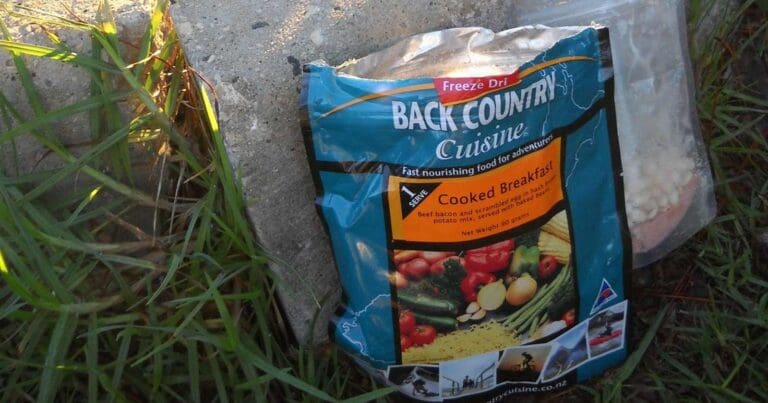
| Freeze dried meals | 1248 | 78 | Efficient evening option | |
| Hot drinks | 256 | 16 | Tea, coffee, chocolate | |
| Sweet biscuits | 594 | 37 | Energy dense treat | |
| Puddings | 260 | 16 | Morale and variety |
Average daily dry weight per person: 824 g
What the numbers reveal
A few patterns stand out:
- Snacks form a substantial proportion of daily intake
Nearly 250 g per person per day is allocated to snack foods. This supports steady energy rather than reliance on three large meals. - High fat foods improve efficiency
Cheese, salami, nuts, and chocolate increase caloric density without excessive bulk. - Energy density varies significantly
The scroggin mix at 188 g per person per day provides a substantial caloric return. By contrast, the 59 g of carrots contribute texture, micronutrients, and variety rather than meaningful energy. Their inclusion reflects durability and morale, not efficiency. - Fresh food is minimal
Fresh items are limited due to weight and spoilage risk. - Dinner remains the recovery meal
Evening intake is carbohydrate-focused, with additional fat and occasional dessert to support recovery and morale. - There is contingency built in
Soup and grain quantities provide buffer capacity for weather delays or slower progress.
For many hikers, a dry weight in the 800–900 g range typically corresponds to approximately 2,800–3,500 or more kilocalories per day, depending on composition. At 824 g per person per day, intake supported sustained effort in cool conditions without excessive pack burden.
Snacks and steady intake
Pre-portioning snack mixes into equal weight daily bags helps regulate intake across the trip. In colder weather, snack consumption often increases. I find steady intake generally more reliable than large infrequent meals.
Lunch considerations
Hard cheeses and cured meats can remain stable for extended periods in cool conditions. Prolonged heat reduces reliability and may require substitution. Lunch weight should prioritise energy density and durability.
Dinner structure
Evening meals support recovery and morale.
A simple structure works well:
- Quick soup for warmth and hydration
- Carbohydrate base such as pasta, rice, or dehydrated meals
- Added fat and protein
- Occasional dessert
Cooking in groups improves efficiency. Solo hikers may prefer in-pouch preparation to reduce washing and fuel use.
Packaging and biosecurity
Repackaging into lightweight sealable bags reduces bulk and can meaningfully lower total carried weight. It also reduces the volume of rubbish you have to carry out, supporting Leave No Trace principles and simplifying daily organisation.
I retain original packaging when crossing biosecurity borders, since repackaged food can attract extra scrutiny.
Tasmania has strict interstate biosecurity rules banning fresh fruit, vegetables and certain other produce from mainland Australia. If hiking in New Zealand, note this is international travel with separate, stringent customs biosecurity declarations. Always check current requirements before travel.
Safety margin
A well-planned food list includes modest reserves. Small quantities of grain, soup, or snacks provide contingency for weather delays, slower progress, or minor navigation errors. Food planning isn’t only about distance. It’s about maintaining a buffer.
Lightweight food planning isn’t about deprivation. It’s about matching intake to effort, managing pack weight, preserving morale, and protecting the recovery and decision making capacity you’ll need if the trip runs longer than planned.
Multi day hiking is not the time for aggressive calorie restriction. It is the time for deliberate energy management. Get the quantity right and you protect not just your energy, but your pacing, your recovery, and the margin you have left if the weather turns or the track takes longer than planned.




What’s your go-to meal for a multi-day hike that balances weight and nutrition without sacrificing taste?
Trail Hiking Australia I go for two categories.
Familiar/Fast: Chicken flavoured Instant noodles repacked in double ziplocks with bacon bits, powdered milk and cheese (I call it Trail Mac & Cheese). Quick Oats or Cornflakes, (double ziplocked again) with milk powder and whatever dried fruit I have on hand. Energy Gels (Chocolate or Coffee w caffeine preferred). Condensed milk in tubes. Military MRE main meal packs (these things last forever).
Fun/New: If it’s a cruisey overnighter and we also plan to cook, then the Jetboil with frying pan comes along. Make up anything you want. Steak, Omelette (eggs in hardshell holder), Pasta… anything really.
If it’s a hike that is technical, need to be as light as possible, then I might splash out for some kinda freeze dried main meal (Jetboil FTW) or stick to the MREs.
Murky Murk oh you are making me hungry. They sounds like solid plans.
Trail Hiking Australia Me too…🤤
I used to hike with a hardcore bloke who swore by 500g dry food per day.
My fave is home made and home dried roo & veg bolognese and couscous.
Darren Hocking I’m going to have to try that. Haven’t dehydrated roo yet. Sounds tasty.
Trail Hiking Australia a lot of advice says lean meats dehydrate the best, but sent some lamb meals to Sandy Robson when she was sea kayaking from Germany to Australia and extra fat content made it rate well.
Roo in bolognese sauce is fantastic. It’s the only meat I use for both dehydrating & everyday meals. I put lots of grated veg in with the meat & tomato too. Then serve with polenta on the track, because it’s quick, easy & no gluten.
Vanessa Reynolds yum. Definitely getting the dehydrator out this weekend.
Darren Hocking Roo Bolognaise is one of my go to meals – great with mash too.
I carry 500g of dry food per day and sometimes still struggle to eat it all! 🤷♀️
Rice with coconut milk powder, curry powder, lots of veggies, tuna, pasta bolognaise, pearl barley with veggies and goat feta cheese, Parmesan block always with me, nuts, dried fruits, mangoes are my favourite. All homemade.
You can find alot of dried ingredients in the supermarket ….the continental rice, dried peas, mushroom, fried shallots, coconut milk powder, couscous,
A good scroggin is essential in the pack