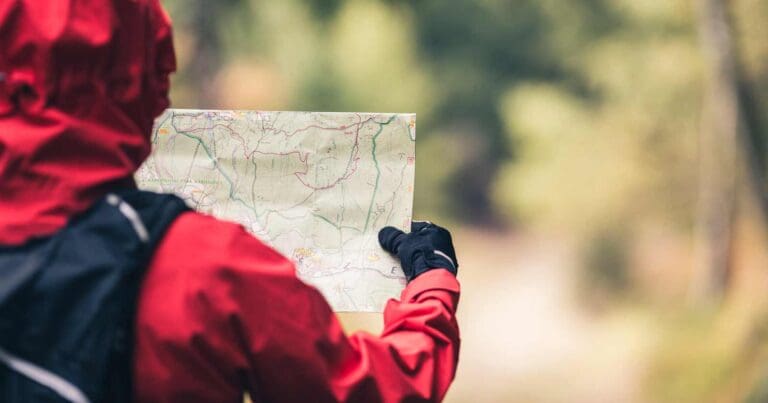
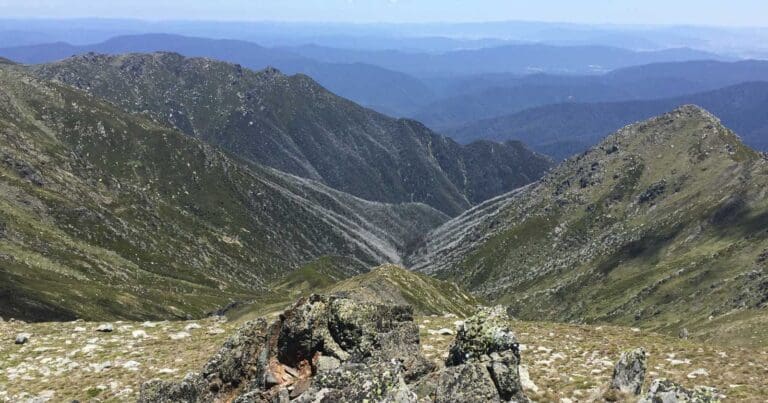
Stepping off the trail is a normal part of hiking. You’ll do it for a toilet break, to get a closer look at some wildlife, or to check out an interesting plant, and there’s nothing wrong with any of that. The problem is how quickly it can go wrong: in dense Australian scrub, getting separated from your group or losing the trail altogether can happen within a few steps, which is why leaving a sign of where you went matters more than most hikers realise. Here’s why it happens so easily, and what you can actually do about it.
Why It’s So Easy to Lose the Trail
Once you step a few metres off the path, dense scrub like mallee or heath tends to look almost identical in every direction, which makes it surprisingly easy to lose your bearings, even after just a few steps. It gets worse because of what you’re usually doing when you step off: if you’re looking for a spot for a toilet break or examining something on the ground, your attention is on the ground in front of you, not on the trail behind you. That “head down” focus is exactly what lets people wander further than they meant to without noticing, because nobody is tracking the way back while their eyes are somewhere else.
This is also why staying accountable to your group matters as much as marking your own spot. If you step off without saying anything, and the bush looks the same in every direction once you’re a few metres off the path, your group has nothing to go on if you don’t come back when expected. It’s even more important if you’re hiking solo: a marker doesn’t just help you retrace your own steps, it gives search and rescue teams a specific point to work from if something goes wrong, rather than an entire trail to search blind. That’s the difference between a quick recovery and a long, stressful search for everyone involved.
How to Leave a Sign When You Step Off
Tell Your Group Before You Go
Before you step off, say something to your group. It doesn’t need to be complicated:
- “I’m stepping off the trail for a quick break; I’ll be back in 5 minutes.”
- “I’m going to check out that plant on the left, will be back shortly.”
- “I’m just going to take a photo, I won’t be long”
- “I’m just going to the toilet, will be back shortly”
That keeps everyone in the loop and stops anyone worrying unnecessarily, so set a clear expectation of when you’ll be back.
Leave a Marker They Can Actually See
Saying something helps, but it doesn’t do much once you’re out of sight, which is why you should also mark the spot where you left the trail. A “natural” marker, like a pile of sticks, tends to blend straight back into the bush and becomes useless the moment you’re disoriented, so it’s better to use something high-visibility from your kit instead.
High-Visibility Options:
- Brightly Coloured Gear: Use a high-vis hat, bandana, or even a spare orange dry bag. Place it on a prominent rock or tie it to a branch at eye level where you exited the trail.
- Trekking Poles: If you aren’t using them for stability while you step away, plant one pole firmly at the trail’s edge. The straight line of a pole is a “non-natural” shape that the human eye picks up quickly.
- Reflective Gear: If it’s late afternoon or overcast, use something with reflective stripping (like a pack cover or a safety patch). If you have to use a headlamp to find your way back, the reflective material will “pop” out of the darkness.
- Fluorescent Tape: Some hikers carry a small strip of “flagging tape.” If you use this, tie it securely to a branch, but never leave it behind.
If you’d rather not leave gear behind, fallen debris works just as well:
Using Natural Materials:
- The Arrow Method: Use three or four fallen branches to create a large arrow on the ground pointing exactly where you went.
- Rock Cairns: Stack three rocks on top of each other. This is a universal “human-made” sign.
Whatever you use, whether it’s a bandana or a rock arrow, you must remove it or scatter it back to its natural state before you continue your hike. Never leave a marker behind for the next hiker to find, that’s part of the Leave No Trace mandate, not an optional extra.
The 10-Metre Trap: When to Turn Back
Because the terrain can look identical in every direction, you don’t need to wander far to lose your bearings. A simple rule: if you’ve stepped off the trail and can’t see or hear your group, turn back immediately rather than pushing on a little further to finish what you were doing. If you’ve already gone too far, it’s time to retrace your steps, not keep going.
Pro-Tip: The ‘Backwards Glance’
As you step away from the trail, stop every few metres and look back at your marker, because the environment can change drastically from the opposite direction. If you can’t spot your marker anymore, you’ve gone too far, so head back to the trail immediately.
Other Things to Get Right While You’re Off the Trail
Never Leave Your Pack Behind
Never separate yourself from your survival gear.
Your pack carries the things that actually keep you alive if something goes wrong: water, a first-aid kit, emergency tools. Leave it behind on the trail while you step off, and if you get lost or injured even a short distance away, you’ve lost access to your basic survival essentials at exactly the moment you need them. If you only need a quick stop, leave behind a hiking pole or a hat instead, and keep the pack with you.
Respect the Environment and the Wildlife
The same care applies to how you step off, not just where. Stay in areas that won’t disturb the ecosystem, especially near water sources or sensitive vegetation, and avoid trampling or disturbing native plants. Stepping off the trail can also bring you closer to wildlife than you’d normally get on the path, so approach animals from a safe distance, give them space, and be mindful of their natural behaviour, including displaced wildlife such as snakes that may move to higher ground after rain. And if nature calls in the way that started all this, follow Leave No Trace (LNT) principles for your toilet stop as well.
Final Thoughts
You’re going to keep stepping off the trail, for a toilet break, a photo, or a closer look at something, because that’s a normal part of hiking. The real issue is that the bush doesn’t give you much warning before you lose your bearings, so the habits that protect you are simple: tell your group, leave a marker, watch for the 10-metre mark, keep your pack with you. They need to happen before you’re disoriented, not after you realise you’re lost. Build them into how you step off every time, so a normal part of the hike stays exactly that.