Finding water on a hike is a normal part of planning for overnight and multi-day walks, and occasionally it becomes a necessary skill on longer day hikes when conditions change. Some walks have reliable water sources, but others depend on seasonal creeks, tanks, or natural features that may simply not contain water when you arrive, which is why assuming water will be there is one of the most common planning errors hikers make.
This article sits within the Trail Hiking Australia Hiking Safety Systems, inside the Hydration and Fuel system. In that framework, water is a safety-critical input that supports cognition, temperature regulation, and decision-making, so when water availability is uncertain, navigation, judgement, and risk management all become directly tied to your hydration planning.
What follows covers where water is commonly found on hikes, how reliable different sources tend to be, and how to manage the risk when water availability is uncertain.
Start with planning, not hope
Before relying on finding water, consider whether the walk genuinely requires it, because carrying sufficient water from the start is always safer than assuming it will be available later. Natural sources can dry up, tanks can be empty, and mapped water points may no longer exist by the time you get there.
If a hike depends on refilling along the way, you need to understand how reliable each source actually is, how far apart they are, and what your options are if one turns out to be dry. Always carry enough water to reach the next confirmed source or safely turn back.
Common natural water sources
Creeks and rivers are the most common natural water sources on a hike, but their reliability varies widely. Larger, shaded waterways at lower elevations are more likely to hold water year-round, while small headwater creeks and exposed drainage lines may only flow after rain.
Soaks, springs, and rock pools can provide water even when surface flow has stopped, but they tend to be small, slow to refill, and easily contaminated, which is why they turn up more often in rocky terrain, gorges, and shaded cliff bases than anywhere else.
Lakes and dams may provide water too, but access is not always straightforward, and water quality can vary a lot depending on stock access, algae, and runoff.
Snow as a water source
In alpine areas, snow can be a genuine water source when nothing else is available. Use clean, packed snow rather than fresh powder, since packed snow holds far more water for the same volume you melt. Avoid any snow that looks discoloured, including patches with a pink or reddish tinge, which is algae rather than just dirt, and steer clear of snow near vegetation or animal tracks for the same contamination reasons as any other source. Adding a small amount of water to the pot before you start melting speeds up the process and stops the pot scorching on dry snow. Melted snow isn’t automatically safe either, so treat it the same as any other natural source before drinking.
Artificial water sources
Water tanks, huts, and trailhead taps can be reliable in some areas, but never assume they will contain usable water, because tanks can be empty, damaged, locked, or contaminated, particularly after dry periods or heavy use. Unless you have recent, reliable information confirming a tank actually holds potable water, treat it as uncertain and plan around that.
Reading the landscape
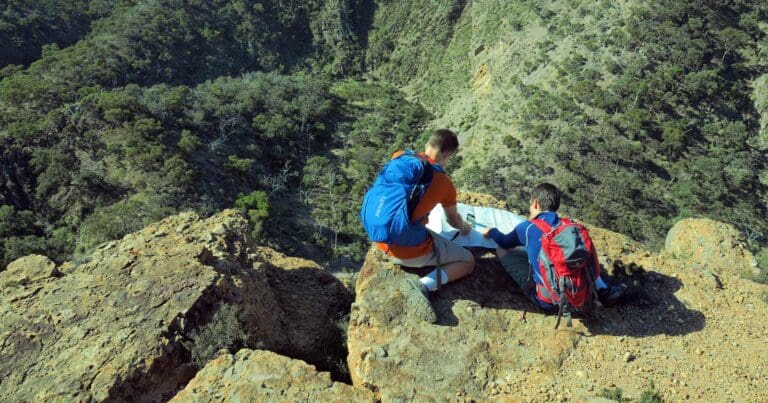
Landscape features can give you useful clues when you are looking for water. It is more likely to be found in shaded gullies, drainage lines, and low points where runoff collects, and vegetation such as dense grasses, reeds, or trees in otherwise dry terrain can indicate subsurface moisture. In rocky areas, look for depressions, cracks, or shaded ledges where water can collect after rain, and in sandy or arid terrain, damp sand, darker soil, or animal tracks converging toward a low point can suggest water nearby.
None of these are guarantees. They are indicators that can help guide your decisions when water is scarce, nothing more.
Seasonal reliability matters
Many water sources are seasonal, so a creek that flows freely in winter or spring may be completely dry by late summer, and water that looks abundant straight after rain can disappear quickly in warm conditions. Before a walk, factor in recent weather, seasonal patterns, and local reports, and do not assume conditions from a previous visit will still apply.
Safety and decision making
When water availability is uncertain, decision making becomes critical, so if you reach a planned water source and find it dry, stop and reassess rather than pushing on hoping to find water later. Continuing without a clear plan usually reduces your options rather than preserving them.
The “Rule of Threes” is a popular survival mnemonic used to help prioritise immediate needs: roughly three minutes without air, three hours without adequate shelter in extreme conditions, three days without water, and three weeks without food. These figures are not physiological limits and actual survival times vary widely. On hikes, the rule is best understood as a way to prioritise decisions when things are not going to plan, not as a guide for how long you can safely continue without water. In practice, dehydration can affect judgement, balance and physical capacity well before any theoretical survival limit is reached.
Ask yourself:
- How much water do we have left?
- How far is the next confirmed source or exit?
- How demanding is the terrain ahead?
- What are the consequences if we do not find water?
Turning back early is often the safest option you have.
Water quality considerations
Water found on the trail can contain bacteria, protozoa, viruses, or chemical contaminants even when it looks perfectly clean. Slow-moving water, water near campsites, stock routes, or anything downstream from human activity carries higher risk, so treat any collected water before drinking it unless you are certain it is safe.
Where you draw from within a source matters too. Edges, backwaters and shallows are where debris, fine sediment and animal traffic tend to accumulate, so drawing from faster, flowing water away from the bank generally gives you a cleaner start, even before any treatment. Avoid drawing downstream of huts, campsites, or any obvious sign of animal activity, tracks, disturbed ground, droppings, since feral animals such as deer, horses, goats and pigs are a well-documented source of contamination in Australian water catchments. If heavy rain has just passed through, it’s worth waiting rather than collecting straight away, since runoff temporarily increases both the bacterial load and the sediment in the water.
Guidance on reducing waterborne risk is covered in: Water purification for hiking: methods and limitations
If water runs low unexpectedly
If you are running low on water because of delays, navigation errors, or unexpected conditions, reduce exertion immediately. Slow down, seek shade where you can, and avoid unnecessary climbs or exposure while you reassess your options, because continuing to push on while dehydrated increases fatigue, impairs judgement, and makes self-rescue harder.
If you have access to a flowing water source and dehydration is becoming severe, drinking it untreated may be safer than not drinking at all. Most waterborne illnesses develop days later, while dehydration can affect your balance, decision making, and ability to move safely within hours, so this is not a replacement for good planning or water treatment, it just recognises that in a genuine emergency the immediate risk is often dehydration, not illness.
Do not rely on survival myths or low-yield techniques such as transpiration traps, which produce very small volumes of water for a high energy cost. Finding an existing water source, drinking conservatively if you have to, or exiting the area safely will usually get you further.
Practical takeaways
- Carry sufficient water whenever possible rather than relying on finding it
- Treat natural and artificial sources as uncertain unless confirmed
- Understand seasonal reliability before a hike
- Use landscape cues as indicators, not guarantees
- Stop and reassess if a planned water source is dry
- Treat collected water before drinking
Finding water on a hike is a useful skill, but conservative planning is still what keeps you safest.



Thanks for the info! Keep up the good work Darren!
Thank you
What’s your go-to method for finding water when you’re out hiking? Have you ever discovered a surprising source?