Understanding scree and why it is hazardous
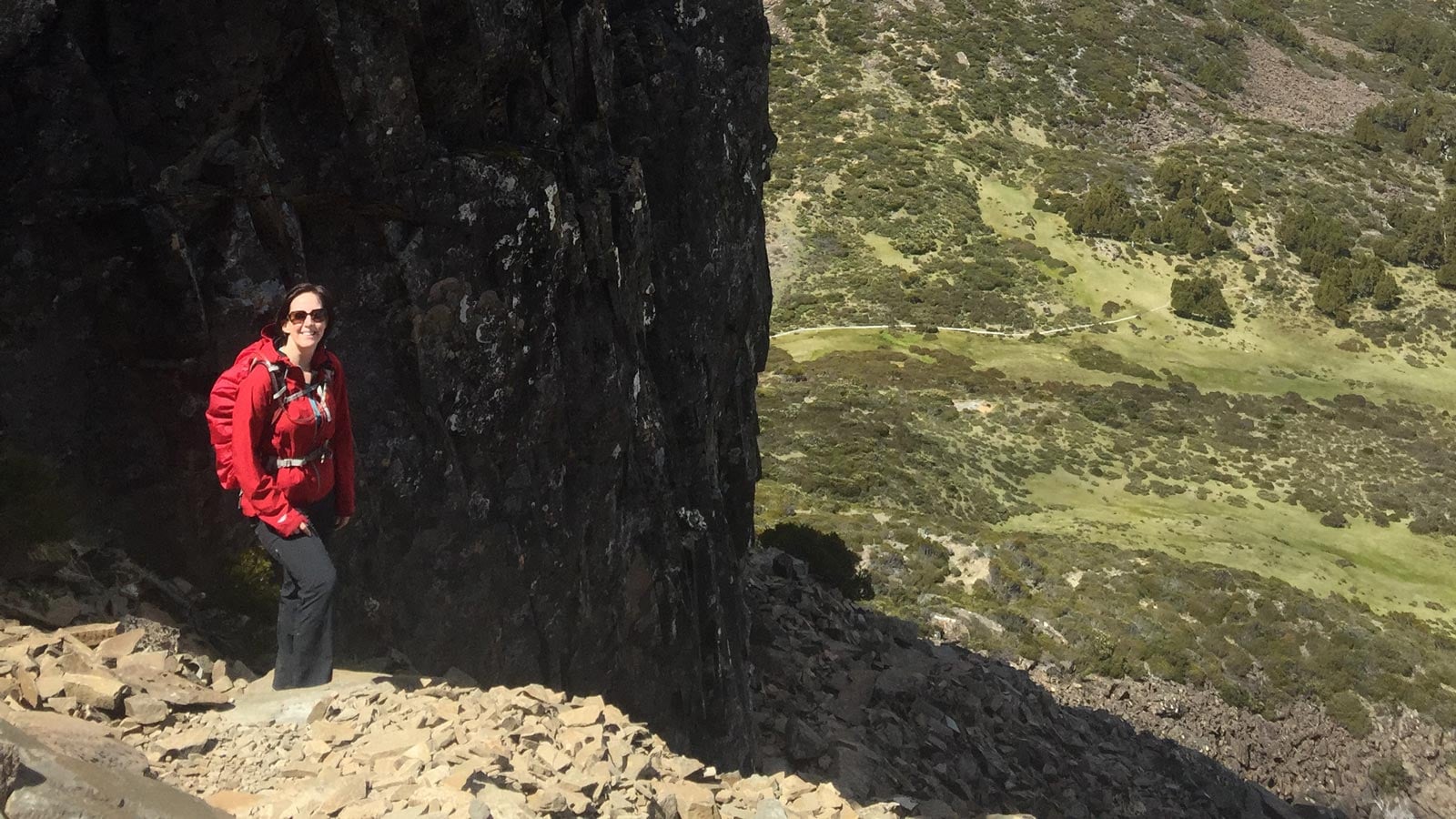
Scree is loose rock fragments that collect on slopes, gullies, and at the base of cliffs. It builds up through repeated weathering, freeze-thaw cycles and erosion breaking solid rock down into smaller pieces that tumble downhill over time, and it settles at the steepest angle it can support, which shifts depending on the size, shape, and mix of the rocks involved.
Unlike firm ground, scree moves under you. Step onto a scree slope and the rocks beneath your boot will shift until they settle under the new load. That movement can be subtle or it can be significant, and on steeper slopes it’s what leads to uncontrolled sliding, a sudden loss of balance, or rocks breaking loose and travelling downhill.
Why scree requires a different approach
Scree amplifies risk because it takes away both traction and predictability at the same time. Two steps that look identical can behave completely differently, even on a slope that seems uniform. Fatigue makes this worse: as your legs tire, your reaction time and balance drop off, and that’s exactly when slips and falls happen.
If you’re not confident moving on unstable surfaces, it’s worth building the core skills first. Hiking with confidence: A guide to walking steadiness covers the balance, foot placement, and body awareness that scree demands.
Stay on established scree tracks
Where a defined track crosses a scree slope, stay on it. Established routes are usually slightly compacted from repeated use and tend to follow the safest line across the slope, and leaving it does two things at once: it increases environmental damage and puts you onto looser, less stable material. Scree tracks usually traverse a slope rather than run straight up or down it, which reduces gradient and limits how much rock moves underfoot. Move carefully, watch every step, and avoid kicking rocks loose that could travel down onto whoever’s below you.
Foot placement and movement
On scree, controlled movement matters more than speed, every time. Place each foot deliberately and expect it to move. Keep your weight centred and avoid over-striding, since that’s what causes a sudden loss of balance if the surface gives way underneath you. On smaller scree, a slightly flatter foot placement improves stability. On larger, angular rocks, test each step before you commit your weight to it. If rocks are shifting significantly with every step, that’s worth stopping to reassess whether continuing is actually a good idea.
Descending scree safely
Descending is where most scree injuries happen. Rapid descents that involve sliding or “surfing” down loose rock can be genuinely unpredictable, particularly with larger rocks in the mix or other people below you.
Controlled descent on very fine, deep scree is sometimes possible in experienced hands, but it carries real risk and isn’t something to rely on. Falls on scree often mean lower limb injuries, abrasions, or rockfall that can hurt someone else.
A slower, controlled descent that prioritises balance and careful foot placement is far safer than trying to move quickly. If you’re carrying a pack, remember the extra weight increases your momentum and makes recovering from a slip harder.
Use poles for balance, not speed
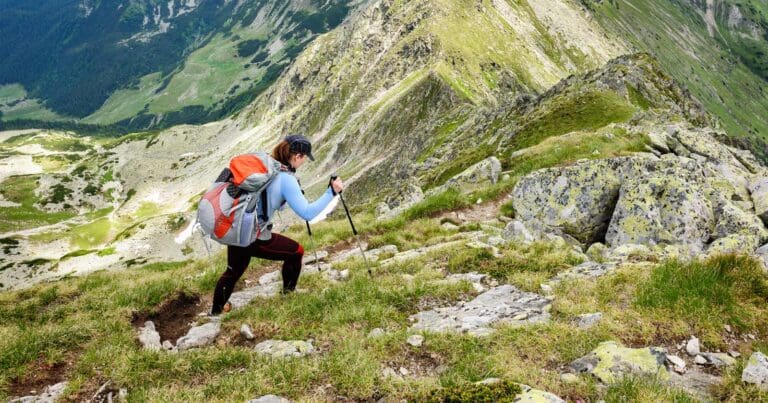
Hiking poles can help improve balance on scree by giving you extra points of contact and letting you test stability ahead of your next step. Use them to support controlled movement, not to increase your speed or take bigger steps. On steep or extended descents, scree puts real strain on knees and ankles, and applying the same principles from Hiking Downhill: Technique, Control and Knee Protection helps cut fatigue and injury risk here too.
Think about what is below you
Dislodged rocks travel fast downhill and can cause serious injury, so always know where other hikers are below you and avoid kicking rocks loose. If you’re travelling as a group, spread out more than you normally would, so a slip or a falling rock doesn’t take out someone else.
When to turn back
If scree gets steeper, looser, or more unstable than you expected, turning back is often the safest call. Conditions can change dramatically over a short distance, and what feels manageable at first can worsen fast. As with any unstable terrain, I’d rather be conservative here than push it. No route is worth an unnecessary injury, or putting someone else at risk.
Moving carefully and reading conditions honestly, as they actually are, does more for you on scree than confidence or speed ever will. Staying on established tracks where you can, descending slowly, and using poles to aid balance rather than speed will keep you upright more often than not. When it starts to feel unstable or beyond what you’re comfortable with, turning back isn’t a compromise, it’s just the sound decision.