Stretching gets treated as a kind of protective ritual before hiking. Plenty of walkers assume it prevents injury, reduces soreness, or gets the body ready for a long day under load. I don’t think the evidence really backs that up, at least not in the way most people expect.
Stretching can help with mobility and comfort, but it doesn’t prevent the load-related overuse injuries that actually put people out of action. Most hiking pain comes down to mechanical stress, cumulative fatigue, terrain demands and pack weight, and conditioning and load management are what actually protect you from that. Stretching is a secondary tool. Used well, it supports the system. Used as a substitute for proper preparation, it becomes a distraction from the work that actually matters.
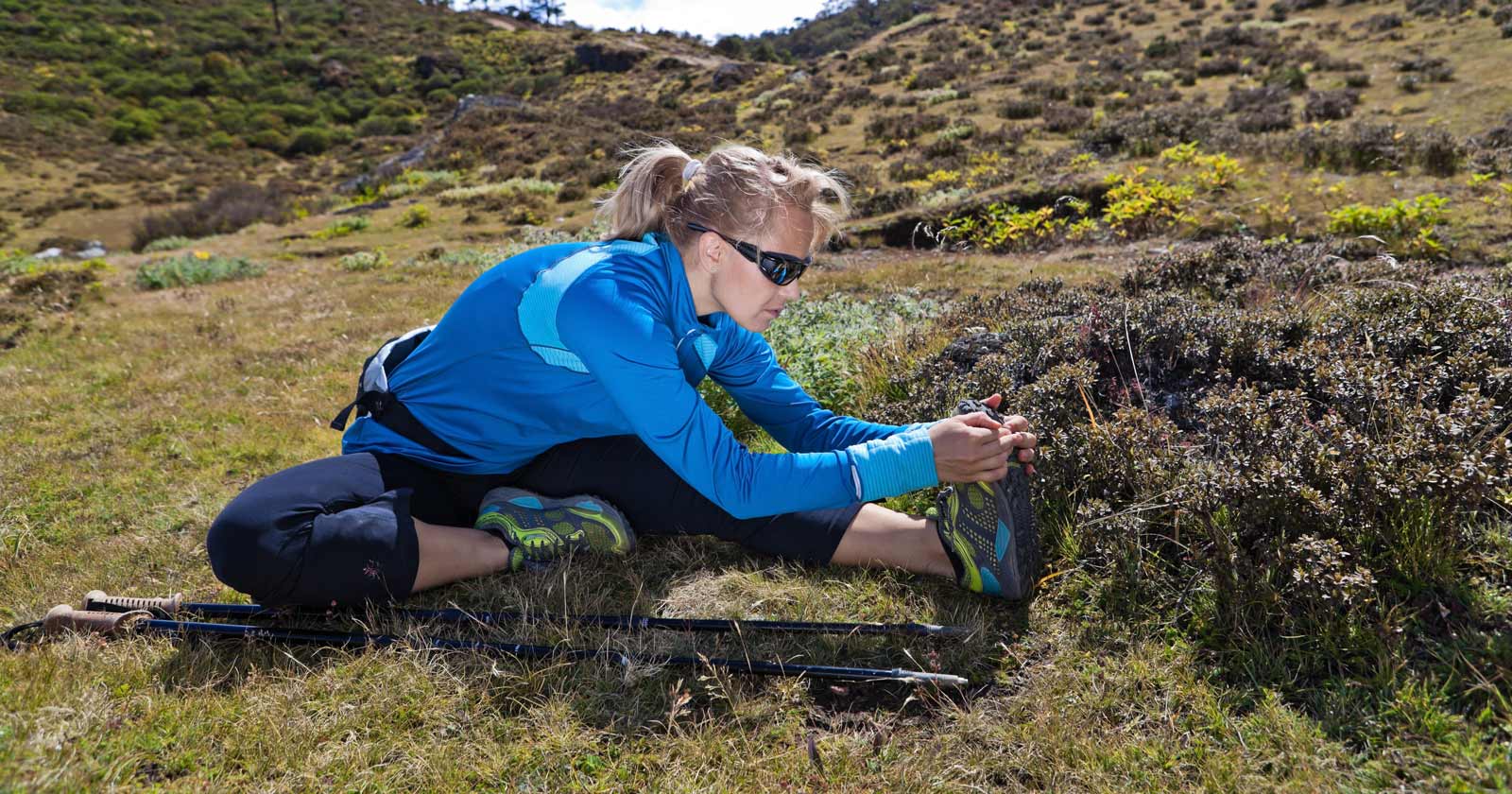
Static versus dynamic: more than holding versus moving
The difference between static and dynamic stretching isn’t really about holding still versus moving. It’s the difference between passive length and neuromuscular preparation.
Static stretching means lengthening a muscle and holding it at end range for a sustained period. That mainly affects passive tissue tension, which is the sensation of tightness you feel. Dynamic stretching means controlled movement through range of motion, and it does something different: it increases blood flow, activates muscle fibres and stimulates the proprioceptive pathways that let your brain know where your limbs are in space. That matters on uneven Australian terrain, because your footing depends on your body knowing exactly where it is without you having to stop and look down.
I think of it like an elastic band. Dynamic movement is like gently pulling and releasing the band so it warms up and becomes responsive. Static stretching is like pulling it to its limit and holding it there. Before you ask that band to support a loaded pack on technical ground, you want it responsive, not overstretched.
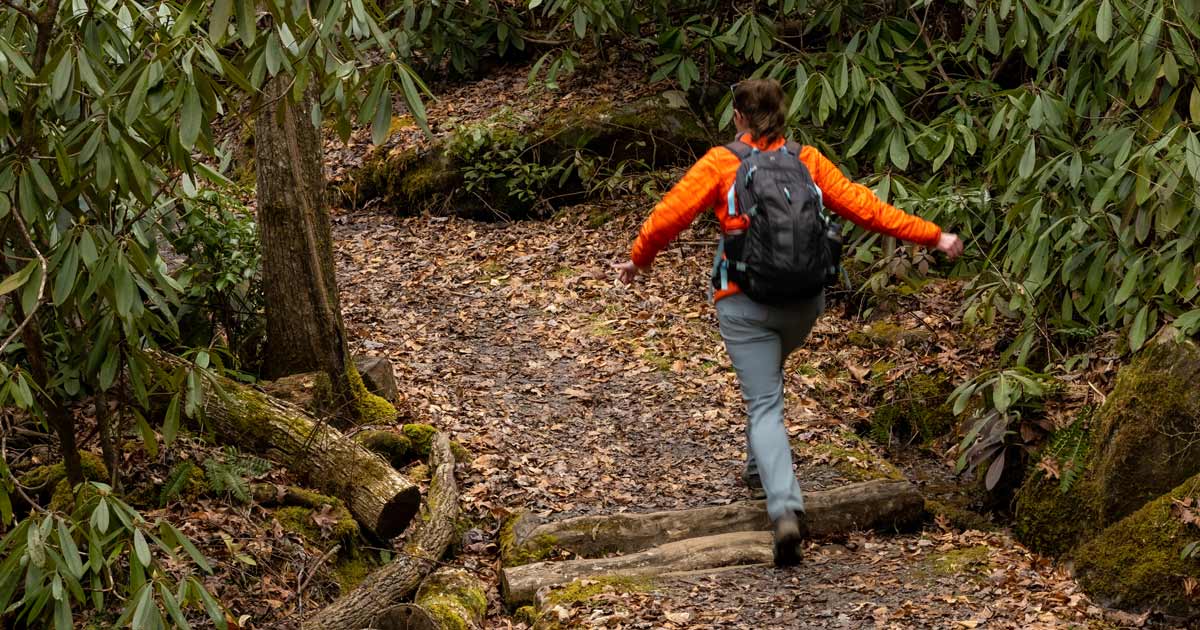
Hiking demands coordination, balance and reactive control, because technical descents, uneven rock platforms and shifting gravel all require your nervous system to respond quickly. Dynamic movement before a hike prepares those pathways: it increases neural drive and improves joint awareness. A few minutes of controlled squats, step-ups, calf raises or leg swings can reduce early stiffness and improve movement quality during the first kilometre.
Static stretching immediately before steep terrain doesn’t help in the same way. Prolonged holds can temporarily reduce peak muscle output and dampen neural activation, and while that effect is modest, it doesn’t enhance downhill control or climbing strength either. The goal before hiking is activation, not relaxation.
The rest break trap
Many hikers fall into what I’d call the rest break trap. After sitting for 20 minutes at a lookout or hut, tissues cool and stiffen, and when it’s time to get moving again, some hikers aggressively stretch tight calves or hamstrings before putting their pack back on. That’s actually when tissue is most vulnerable, because cold muscles held at end range under load can increase irritation rather than prevent it.
A safer transition is gentle dynamic movement. Slow, unloaded knee bends, controlled calf raises or short walking strides restore circulation and joint lubrication more effectively than forceful stretching, because movement prepares the system for load and static holds simply don’t.
Morning stiffness at camp, or tightness after a long descent, is common, and it’s usually related to cumulative eccentric load rather than true muscle shortening. Movement is often the most effective response here: gentle, unloaded joint motion increases synovial fluid distribution and restores range without provoking irritation. Static stretching may ease the sensation of tightness, but it doesn’t reverse eccentric muscle soreness, because delayed onset muscle soreness is primarily a response to braking forces on descents, and recovery from that depends more on conditioning, nutrition, hydration and sleep than on stretching.
That said, static stretching can still play a role in comfort, particularly at camp or on rest days. It may help relax tissues and reduce the perception of tightness. I just wouldn’t mistake that for injury prevention, because it isn’t.
Stretching also doesn’t reduce pack weight, improve downhill braking control, correct hip weakness, offset sudden increases in distance, or prevent patellofemoral irritation. If your goal is reducing knee, hip or back pain, strengthening and progressive load exposure will do more for you than a flexibility routine. Stretching can complement your preparation. It can’t replace it.
Practical comparison for hikers
| Feature | Dynamic (Before/During) | Static (After/At Camp) |
| Primary goal | Activation and coordination | Comfort and relaxation |
| Mechanism | Increases blood flow and neural activation | Lengthens passive tissues |
| Hiking context | Cold starts, steep climbs, after rest breaks | Cooling down, camp, rest days |
| Hiker benefit | Reduces early stiffness and improves control | Eases the sensation of tightness |
Dynamic movement is generally the better choice before hiking or after rest breaks, because it prepares the nervous system for load and terrain demands, while static stretching suits comfort after hiking rather than injury prevention. Most hiking pain is mechanical and fatigue-driven, so conditioning, strength and sensible load progression remain the things that actually protect you. Stretch if it helps you feel prepared, but don’t mistake it for structural protection.





What’s your go-to dynamic stretch before hitting the trails? I’d love to hear what gets your muscles warmed up and ready to go!