Field test and review
Winter hiking brings a different set of challenges, particularly when trails are covered in snow or ice. But with the right gear, it becomes a far more controlled and enjoyable experience. As I mentioned in my Grivel G1 ice axe review, conditions themselves are rarely the issue. It usually comes down to whether your gear matches the environment.
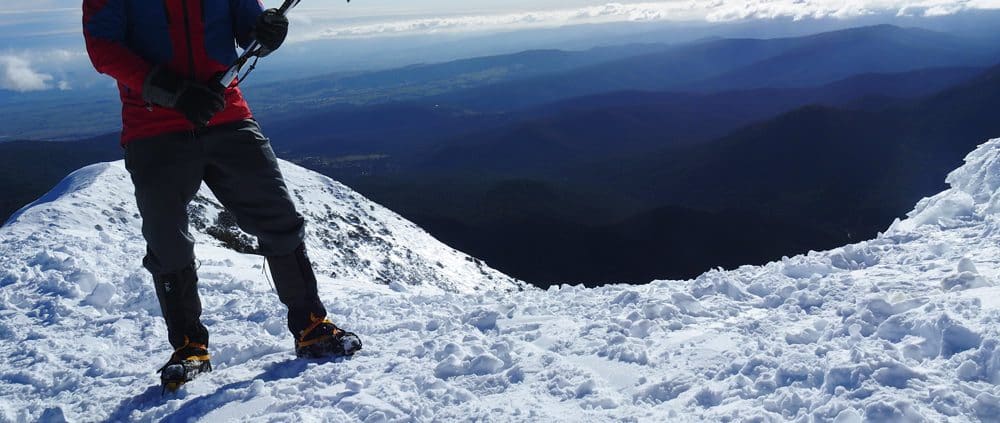
If you’re heading into snow-covered terrain, traction becomes the limiting factor. On frozen or compacted snow, crampons move from optional to essential. They provide the grip needed to reduce the risk of slipping, particularly on slopes where a fall would have consequences.
It’s also important to understand that crampons and ice axes work together. If you’re wearing crampons, you should always carry an ice axe. In the event of a fall, the axe is what allows you to self-arrest. Trying to stop yourself using crampon points alone can cause them to catch abruptly, which can flip you forward and make the situation worse.
Gaiters are also worth including. They keep snow out of your boots and protect your lower legs and pants from the inevitable contact with sharp crampon points.
When I visited Bogong Equipment in Melbourne, I was introduced to the three main crampon categories. C1 crampons use full strap-on bindings and suit general hiking and mountaineering. C2 combines a heel clip with a front cradle and requires stiffer boots. C3 is fully rigid with step-in bindings, designed for technical climbing.
At this stage, I wasn’t heading into vertical terrain. I needed something reliable for hiking and general alpine travel. That led me to the Grivel G10 New-Classic.
The crampon anatomy
Crampons are typically made from steel, stainless steel, or aluminium. Steel is the standard choice for hiking and mountaineering because it holds up to repeated use, while aluminium saves weight at the cost of durability, better suited to occasional use or lighter objectives. The G10 uses chromoly steel, which gives it a strong balance between durability and weight for repeated use on mixed snow and ice.
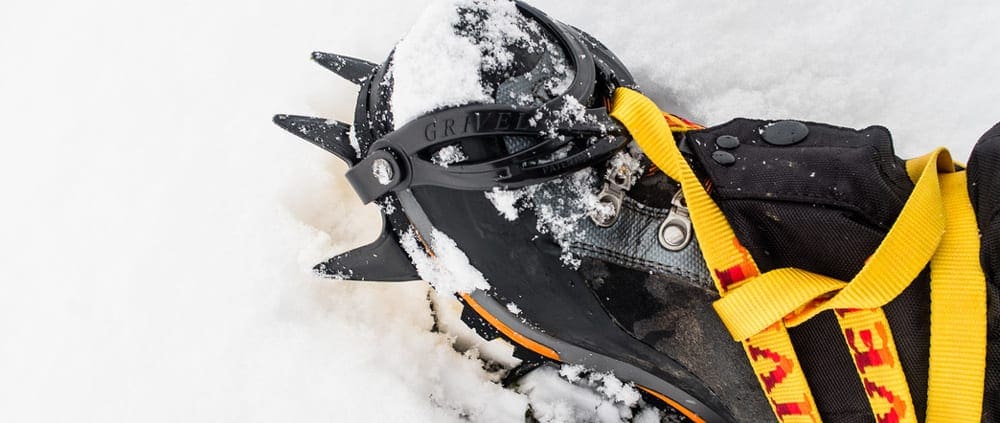
The binding
The New-Classic binding is one of the standout features. It uses thermoplastic cradles at the front and rear, allowing it to fit a wide range of hiking boots without requiring specialised soles.
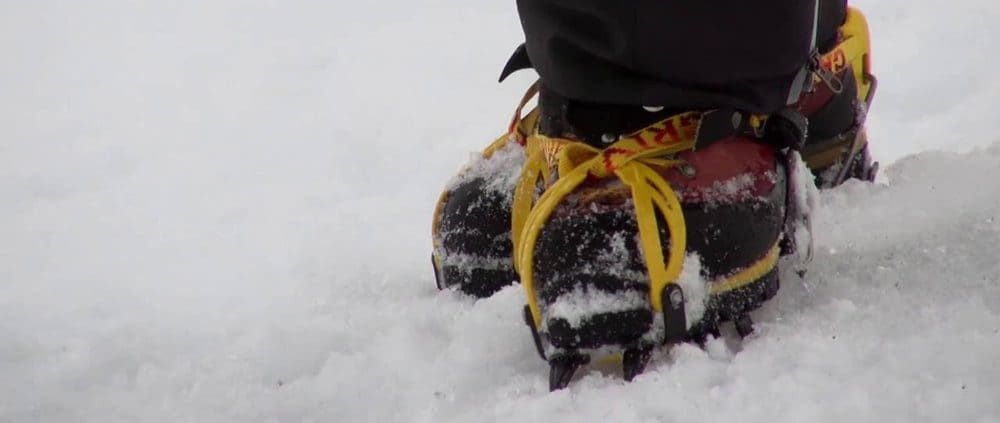
Compared to more technical systems, it’s simple and forgiving. Even with cold hands, fitting the crampons is quick and straightforward. There’s no need to align toe bails or clear snow from boot welts. The strap system is intuitive and secure, taking less than a minute to fit properly.
This flexibility was a key factor in my decision. It works reliably across different boots, including those with some wear in the sole, which isn’t always the case with more rigid systems.
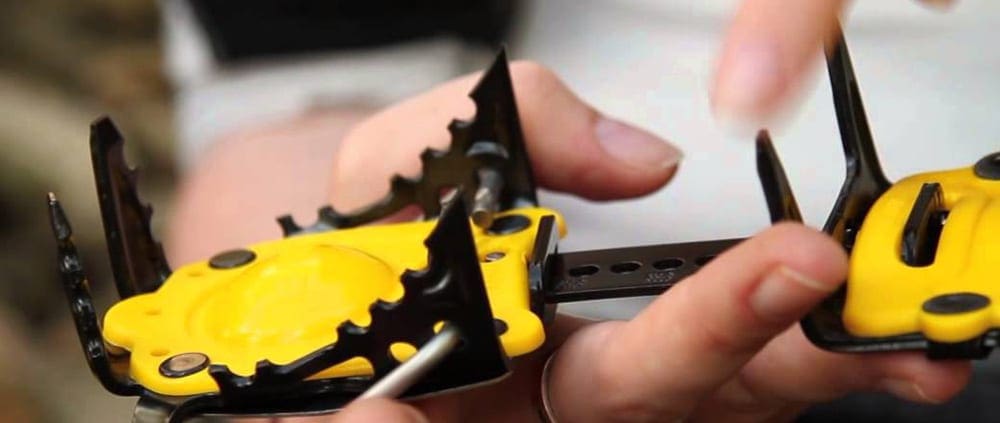
Anti-balling plates
Snow build-up under crampons can completely compromise traction. The anti-balling plates are designed to prevent this, and in practice, they worked exactly as intended.
I found myself checking regularly, expecting to see snow accumulating underfoot. It never did. Across multiple outings, I didn’t need to clear the plates once, which is exactly what you want from a feature like this.
Points
The G10 uses a 10-point configuration. Twelve-point crampons are more aggressive for steep or technical terrain, but for hiking and moderate slopes, 10 points gave me plenty of bite when ascending without feeling overly aggressive or awkward on flatter ground. There was never a point where I felt limited by the design.
Flexibility
One of the biggest surprises was how natural the G10 felt underfoot. C1 crampons offer a level of flexibility that makes walking more comfortable and less mechanical than more rigid designs.
Using a flat-foot technique, you’re able to engage multiple points at once, which improves stability. The flexible adjustment bar contributes to this, allowing the crampon to move more naturally with your stride.
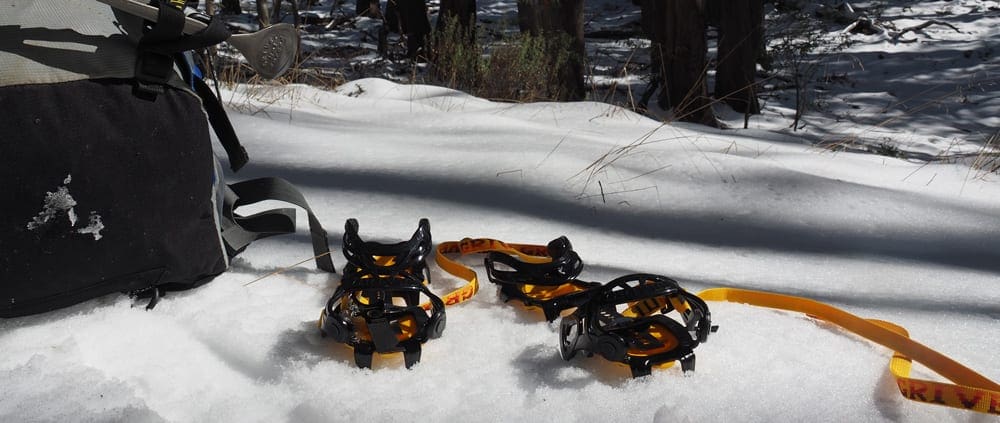
Adjustment
Adjusting the G10 is straightforward. The sliding steel bar with a spring-loaded locator allows quick changes between boot sizes, and it packs down compactly when not in use.
It’s effectively a one-size system, with the option to shorten the bar if needed using the included bolt set. No modifications or workarounds required.
So why the G10?
The G10 sits squarely in the space most Australian winter hikers actually operate in. It’s designed for general mountain use, not technical climbing, and that’s exactly where it performs best.
With 10 points, a semi-rigid structure, and durable steel construction, it provides reliable traction across icy trails and moderate slopes. In use, it felt stable and predictable, allowing me to move confidently without overthinking each step.
While aluminium options are lighter, they don’t offer the same durability. The G10 strikes a more practical balance for repeated use in mixed conditions.
For steeper or more technical climbing, a more aggressive crampon would be needed. Likewise, for deep, soft snow, snowshoes may be the better tool. But for firm snow, ice, and general alpine terrain, the G10 is well suited.
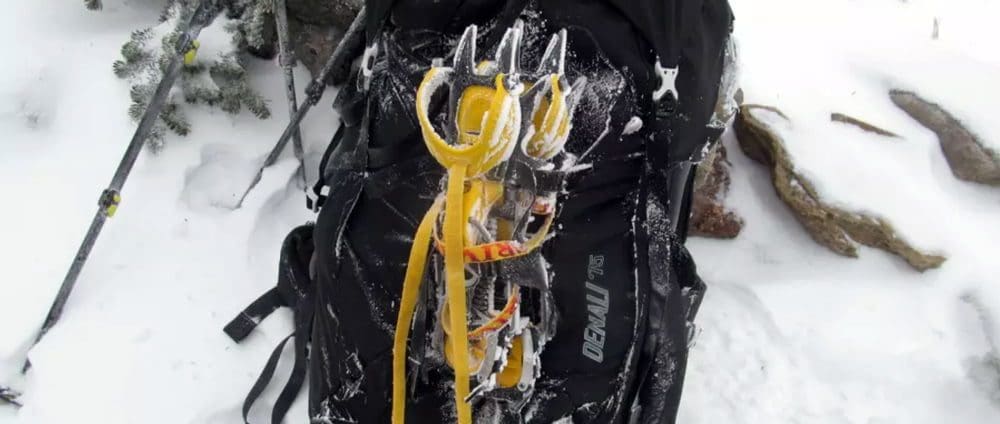
In my experience so far, the G10 has exceeded expectations, and it feels aligned with the conditions most hikers will encounter in Australia.
It’s also telling that I ended up buying a second pair for my wife. That decision came down to trust in how they performed in real conditions.
Suitable for
- Hiking
- Mountaineering
- Trekking
- Ski mountaineering
- Backpacking
Buy direct from Bogong Equipment for $219.95
Tech Specs
The New-Classic binding system is designed for simplicity and reliability, making it particularly suitable for first-time users and general hiking applications.
- 10 points
- 2 front points
- Chromoly steel construction
- Semi-rigid asymmetric design
- 820 grams (per pair)
- C1 rating