Best hiking snacks for day and multi day walks
Food that looks good at home does not always work on the trail.
Some snacks melt, some turn rock hard in the cold, some feel impossible to swallow halfway up a steep climb, and others sit heavily in the stomach when you are working hard. The difference between carrying food and actually eating it often comes down to practicality.
There is no single perfect hiking snack. The aim is to choose foods that are lightweight, energy dense, easy to access, and realistic to consume under load, in changing temperatures, and sometimes with cold or tired hands.
Good snack selection supports steady energy, stable mood, and clear thinking across the day. Poor selection often leads to skipped intake, late day fatigue, and preventable decision making errors.
What makes a good hiking snack?
Effective trail snacks are:
- Energy dense relative to their weight
- Stable in heat or cold
- Easy to access and portion
- Palatable when mildly fatigued
- Tolerable under exertion
For longer hikes, energy efficiency matters. Many experienced hikers aim for foods that provide roughly 400 to 500 kilocalories per 100 grams. Nuts, chocolate, nut butters, and hard cheeses tend to be more efficient than fresh fruit, which contains more water and bulk for the same energy return.
Weight is not the only consideration, but inefficient food adds pack weight without extending range.
High carbohydrate quick boost options
These are useful during sustained climbs, long ascents, or when energy begins to dip.
- Chocolate
- Dates
- Dried fruit
- Energy gels
- Honey or maple syrup sachets
- Jelly style chews
These foods are rapidly absorbed and can raise blood glucose quickly. Honey and maple syrup sachets are increasingly popular as simple, easily swallowed carbohydrate sources.
In hot conditions, chocolate can melt and become messy. In alpine winter conditions, the opposite problem occurs. Some bars, particularly protein or dense “chewy” styles, can become extremely firm and difficult to bite. For cold weather trips, consider softer baked bars or fruit leathers that remain manageable with cold hands.
Trail mix and mixed snacks
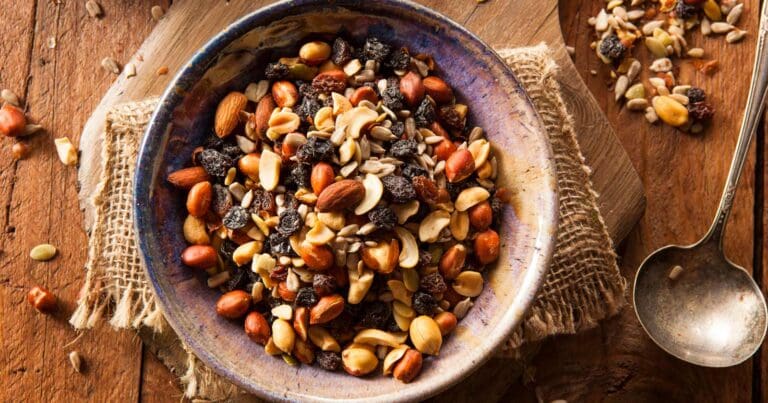
Trail mix remains one of the most practical hiking snacks because it combines carbohydrate and fat in a lightweight format.
A typical mix may include:
- Dried fruit for quick carbohydrate
- Nuts for sustained energy
- Chocolate for palatability
Salted nuts can help maintain sodium intake and appetite during long days.
Portioning matters. Instead of carrying one large bag, pre divide trail mix into smaller daily or hourly portions. This helps regulate intake and prevents overconsumption early in the day.
Fresh fruit versus dried fruit
Fresh fruit such as apples, oranges, and bananas can be refreshing on shorter hikes.
- Oranges provide fluid and vitamin C
- Apples offer moderate carbohydrate and reasonable durability
- Bananas supply carbohydrate and potassium
However, fresh fruit is heavier and less energy dense due to its water content.
Dried fruit is lighter and more compact, but it is also more concentrated. Some varieties, particularly dates and certain dried fruits, are high in fermentable sugars. For some hikers, these can cause bloating or gastrointestinal discomfort under exertion.
Every digestive system responds differently under stress. Test new snacks on shorter walks before relying on them during a remote multi day hike.
Energy bars
Energy bars are convenient and widely available. Most provide a combination of carbohydrate with small amounts of protein and fat.
They are useful because:
- They are compact
- They fit easily into pockets
- They simplify portion control
Be aware of palatability fatigue. On multi day hikes, sweet bars can become unappealing. Including savoury alternatives helps maintain appetite and consistent intake.
Also consider texture in cold weather. Some bars become very firm in low temperatures and may be difficult to chew with cold fingers.
Savoury and higher fat options
After several hours of sweet snacks, many hikers crave salt and fat.
Savoury options can include:
- Salted nuts
- Pretzels or crackers
- Jerky
- Hard cheeses such as Parmesan or wax coated Cheddar
Hard cheeses are relatively stable for several days and provide dense energy along with sodium and fat. Jerky provides protein and iron, which are more relevant on multi day trips where muscle repair matters. These foods are not rapid carbohydrate sources, but they support appetite management and overall energy intake.
Liquid fuel options
When appetite drops in heat, cold or at altitude, chewing may feel unappealing.
Sports drinks or diluted carbohydrate powders allow intake without chewing and can help maintain hourly carbohydrate targets. As with gels, they should be paired with adequate water and used deliberately rather than excessively.
Liquid calories are a useful supplement, not a replacement for a balanced intake across the day.
Plan for appetite changes
On multi day hikes, taste preferences often shift. Sweet foods that were appealing on day one may feel heavy or nauseating by day three.
Plan for variety:
- Include both sweet and savoury items
- Vary textures
- Rotate snack types across the day
Food that remains uneaten provides no safety benefit.
The safety buffer
Within the Hiking Safety Systems framework, snack planning includes a margin.
Always carry at least one high density emergency snack that remains untouched during normal intake. This could be an energy bar, chocolate block, or nut based product stored at the bottom of your pack.
This is your safety buffer for:
- An unexpected delay
- A slower than planned return
- An unplanned night out
Energy reserves are part of risk management, not just meal planning.
Snack choice as part of energy management
Good snack selection means little without consistent timing behind it. Snack regularly when hiking for sustained energy covers why steady intake protects blood glucose, decision making and pacing across the day.
The most effective hiking snacks are not necessarily the most fashionable. They are the ones that are lightweight, accessible, digestible, and reliably consumed when needed.
Deliberate food choice, combined with structured timing, strengthens the entire Hydration and Fuel system on the trail.




More great tips as usual. 👏🏻👏🏻👏🏻
You see so many rookies think that not eating is the way to get the most out of a ‘workout’
…when the opposite is true, especially for longer walks and multi day hikes.
Murky Murk I’m like that guy on the snickers ad (hangry) if I go too long without a snack.
Trail Hiking Australia I know 😁
Murky Murk ok. I’m going to get a snack before I respond to that 🙂