Hike at a Glance
Max elevation: 1728m
Min elevation: 1258m
Total Ascent: 1130m
Hike overview
The Mount Stirling Craigs Hut Loop is a 20 km, grade 4 hike in Alpine National Park, Victoria, and usually takes around eight hours to complete. It is a rewarding circuit that combines varied alpine terrain, historic huts, and a strong sense of place, making it a popular choice for experienced walkers looking for a full day on the track.
The walk begins near Telephone Box Junction on Mount Stirling and follows a broad loop around the resort area, with a memorable return section via the iconic Craigs Hut. Along the way, the route passes several well known huts, including Bluff Spur Hut, Geelong Grammar School Hut, and the Cricket Pitch, each adding character and a sense of history to the journey.
From Telephone Box Junction, follow the upper right section of Circuit Road before turning left onto Baldy Loop and then right onto Bluff Spur Trail, which climbs steadily to Bluff Spur Hut. Beyond the hut, continue through the trail intersection, keeping the South Summit Trail to your right and West Summit Road to your left. At the Howqua Gap Track, turn left and follow the unsealed road as it skirts below the Stirling summit.
A short but steep side trip leads to the 1749 metre summit of Mount Stirling and is well worth the effort for those with the time and energy. After returning to the main route, continue west along Clear Hills Track, passing through Monument Saddle and by The Monument before heading north east to reach Craigs Hut. This well known high country hut is a highlight of the walk and a great place to pause before the return leg.
Leaving Craigs Hut, retrace your steps along Clear Hills Track back towards Mount Stirling and the junction with Stirling Trail. Turn left through the gate to reach GGS Hut, then continue along Stirling Trail to the intersection with King Saddle East Road and Circuit Road. A final left turn onto Circuit Road brings you back to Telephone Box Junction, completing a varied and satisfying alpine circuit.
Tips
- This track is subject to seasonal access restrictions. When snow is present, snowshoes are required. As a general guide, walking and hiking are best suited from October to May, with snowshoeing typically from June to September. For current access conditions, snowshoe etiquette, and trip planning advice, contact the Mansfield Visitor Information Centre on 03 5775 7000.
- Mount Stirling offers several suitable areas for overnight camping during longer bushwalks. Choosing appropriate campsites and following low impact practices helps protect this fragile alpine environment for future visitors.
- Camp among snow gums rather than in lower Mountain Ash forests, as Mountain Ash trees are prone to unpredictable limb and tree fall.
- Be prepared for rapidly changing alpine weather, including sudden drops in temperature, strong winds, and poor visibility.
- Carry a detailed map and compass and make sure you know how to use them before setting out.
- Let someone know your plans, expected route, and return time, or lodge a trip intention form before you go.
- Use provided toilets where available. If none are present, dig a deep hole at least 100 metres from waterways to reduce the risk of contamination.
- Pay close attention to fire restrictions and evacuation information. Never light fires on total fire ban days and if conditions are unclear, do not light a fire at all.
- Take care not to damage alpine plants or disturb wildlife, as recovery in these environments is slow.
- Carry out all rubbish and use bins only where provided, leaving the area clean for others to enjoy.
Track grade
Grade 4 (Hard) - Challenging Walks for Experienced Walkers: Grade 4 on the AWTGS signifies challenging walking tracks. Bushwalking experience is recommended for these tracks, which may be long, rough, and very steep. Directional signage may be limited, requiring a good sense of navigation. These walks are suited for experienced walkers who are comfortable with steeper inclines, rougher terrain, and potentially longer distances.
Walk map and GPX file
Max elevation: 1728 m
Min elevation: 1258 m
Total climbing: 1130 m
Total descent: -1129 m
Content use
Please don’t copy GPX files or content from this site to AllTrails or other platforms. Each trail has been personally mapped, documented, and refined to support Australia’s bushwalking and hiking community. While some details come from land managers, every listing reflects significant personal effort. This is a free, community-driven initiative—your respect helps keep it that way.
Gallery
Got any photos from this hike? Your photos can help others plan. Share shots from along the trail so fellow hikers know what to expect.
Click to add your photos >>
Getting there
Getting to the trailhead: Alpine National Park.
From Mansfield, follow Mount Buller Road for around 30 km to the Mirimbah toll gate, where an entry fee applies during the winter season. After passing through the gate, turn left onto Mount Stirling Road and continue to Telephone Box Junction. The final section between Mirimbah and Telephone Box Junction is about 8 km of unsealed road. In winter, vehicle access is restricted beyond Telephone Box Junction, and all two wheel drive vehicles must carry snow chains when travelling to this point.
Need a rental car to get you to the hike? Find one here.
Find a place to stay
Wondering where to stay near this hike? Find accommodation close to the trailhead — hotels, cabins and campgrounds nearby. Click the button to view the interactive map.
Closest towns to this walk: Benalla, Bright, Dinner Plain, Falls Creek, Harrietville, Hotham Heights, Mansfield, Mitta Mitta, Mount Beauty, Mount Hotham, Myrtleford, Omeo, Porepunkah, Tawonga South, Wangaratta
Let someone know
Heading out? Fill in a trip intentions form so someone knows your plans. If things go wrong, they can raise the alarm fast, giving you peace of mind on the trail.
About the region
Stirling is the only Victorian alpine resort with a largely undeveloped and unspoilt true alpine summit, offering a readily accessible 'semi-wilderness' experience for visitors. This fact, combined with the resort's wealth and diversity of environmental characteristics and its close proximity to Melbourne (230 km), makes Mount Stirling unique in the Australian Alps.
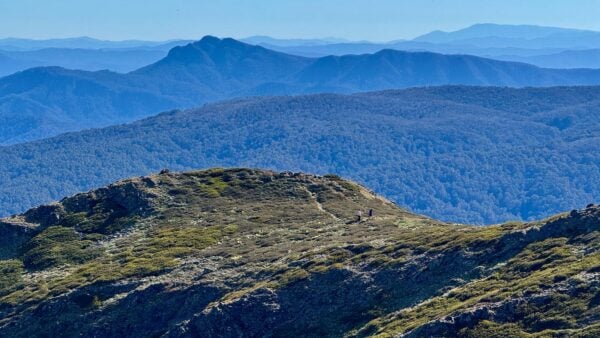
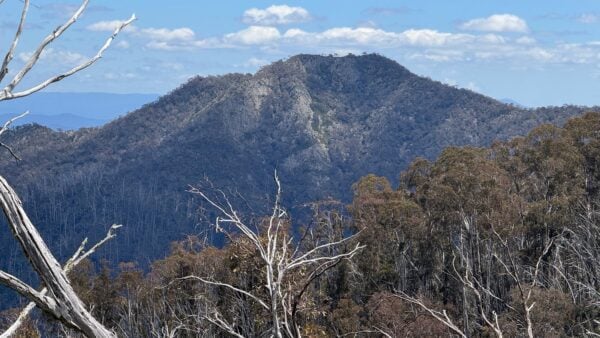
The summit at Mount Stirling is located at 1749 metres and offers a 360 degree panoramic view of surrounding mountain ranges. The breathtaking high country landscape features sub-alpine Alpine Ash forests, Snow Gum woodlands and wide expanses of alpine meadows that are simply stunning during summer and winter.
The Alpine National Park is a national park in the Central Highlands and Alpine regions of Victoria, Australia. The 646,000-hectare national park is located northeast of Melbourne. It is the largest National Park in Victoria, and covers much of the higher areas of the Great Dividing Range in Victoria, including Victoria's highest point, Mount Bogong at 1,986 metres and the associated subalpine woodland and grassland of the Bogong High Plains. The park's north-eastern boundary is along the border with New South Wales, where it abuts the Kosciuszko National Park.
Similar walks nearby
Looking for more walks in or near Alpine National Park? Try these trails with a similar difficulty grade.
Explore safe
Plan ahead and hike safely! Carry enough water, pack layers for changing conditions, and bring safety gear like a torch, PLB, and reliable communication device. Check official sources for trail updates, closures, and access requirements, and review local weather and bushfire advice. Most importantly, share your plans with someone before you go. Being prepared makes for a safer and more enjoyable hike! Stay Safe, Explore More, and Always #ExploreSafe.
Packing checklists
What you carry in your pack depends on factors like weather, terrain, and your adventure type. Not sure what to bring? My free planning, food, and packing checklists are a great starting point, covering day hikes, overnight trips, and multi-day adventures. Use them to customise your kit and always prioritise safety.
Suggest an edit
Notice something different about this trail? Whether it’s a new feature, a route change, or a closure, share your update so we can keep our info accurate and helpful for fellow hikers.
Click to suggest edits >>
Acknowledgement of Country
Trail Hiking Australia acknowledges the Traditional Owners of the lands on which we hike and pay respects to their Elders, past and present, and we acknowledge the First Nations people of other communities who may be here today.