Ancient volcanic peaks on Queensland’s Scenic Rim
Overview
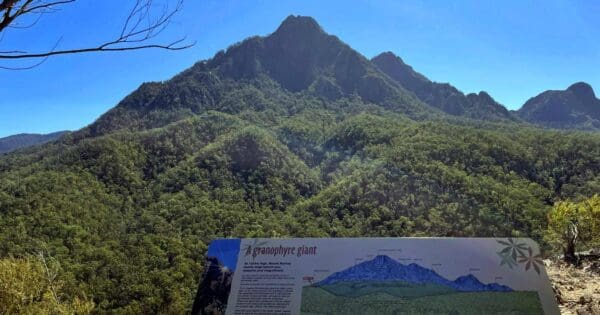
Mount Barney National Park protects one of the most rugged mountain landscapes in south-east Queensland. Not far from the New South Wales border and within reach of Brisbane, the park is defined by a chain of steep peaks including Mount Barney, Mount Maroon, Mount May, Mount Lindesay, Mount Ernest, Mount Ballow and Mount Clunie. These mountains are the weathered remains of the Focal Peak Shield Volcano, which erupted about 24 million years ago.
Much of the park lies within the Gondwana Rainforests of Australia World Heritage Area, reflecting its long-term importance for geology, evolution and conservation. The country changes quickly with altitude, from open forest on the lower slopes to subtropical rainforest above about 600m, then heath shrublands and cooler high-country vegetation near the summits.
Highlights
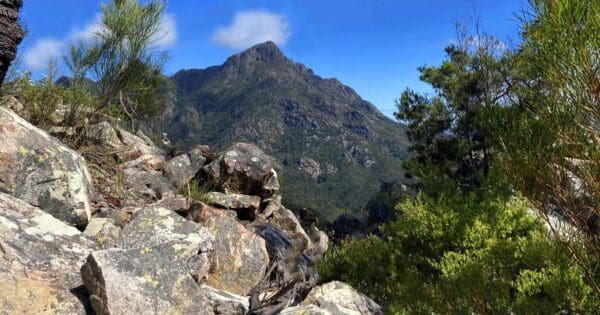
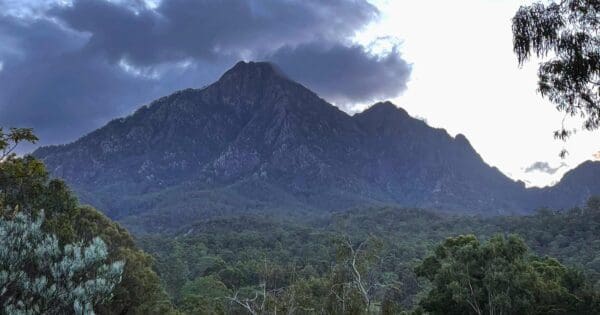
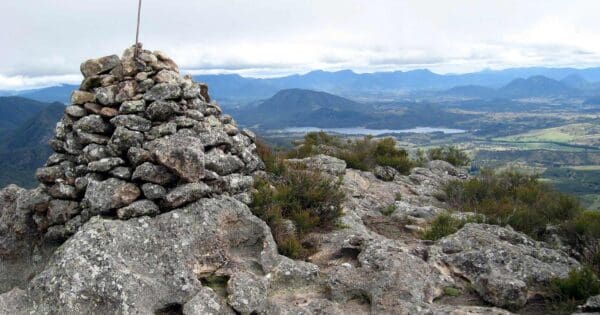
The big draw here is the shape of the landscape itself. Jagged volcanic peaks rise sharply above the Scenic Rim, giving the park a bold, dramatic character that feels quite different from the gentler bushland found elsewhere in the region. Mount Barney stands out as the second highest peak in south-east Queensland, but the surrounding peaks are just as important in creating the park’s unmistakable skyline.
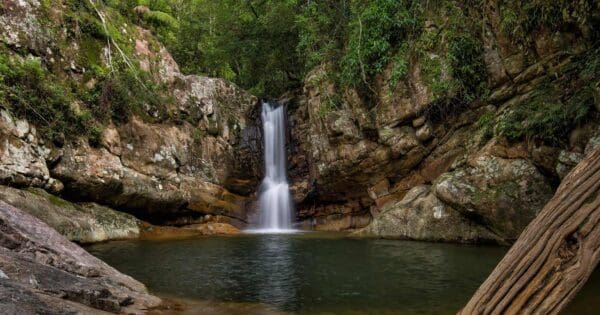
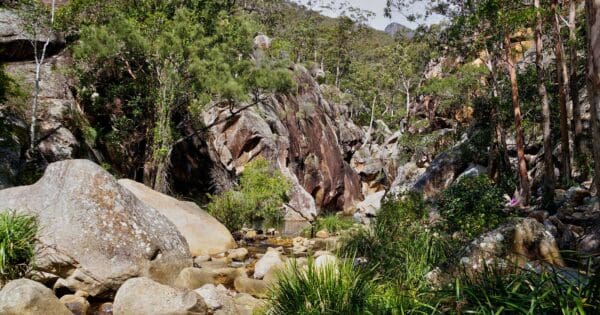
There is also real variety in the scenery from one part of the park to another. Rocky mountain slopes, forested foothills, creek lines and pockets of rainforest sit close together, so the terrain feels layered rather than uniform. That mix of steep relief and contrasting vegetation is a big part of what makes the park memorable.
Best Time to Visit
The cooler months are generally the most comfortable time to spend time in Mount Barney National Park, especially if you want clear views and milder daytime temperatures in the mountains. Conditions at higher elevations can feel noticeably different from the surrounding lowlands, with cooler air and more changeable weather.
At any time of year, this is a place where altitude and exposure shape the experience. Lower slopes can be warm while the upper country supports cooler vegetation communities more often associated with higher mountain environments.
Plants and Animals
Mount Barney National Park supports a striking range of plant communities for a single area. Open forests cover the foothills, subtropical rainforest appears higher up, and montane heath shrublands occur near the summits. Mount Ballow carries cool temperate rainforest, while Mount Maroon has mallee eucalypt shrublands, an unusual contrast within the same park.
The park is also important for several rare and threatened plant species. Among them are the endangered Mount Maroon wattle, the near-threatened bell-fruited mallee, and the vulnerable bush pea and Hillgrove gum. This concentration of specialised vegetation is one reason the park has such high conservation value.
Culture and Heritage
The peaks of Mount Barney National Park hold special significance for Aboriginal people, and stories connected to these mountains express an enduring connection to this country.