Sorry, no records were found. Please adjust your search criteria and try again.
Sorry, unable to load the Maps API.
Explore stunning hiking trails of Kennedy Range National Park
Discover the diverse trails of Kennedy Range National Park, Western Australia, offering hikes and walks for all skill levels and interests. Find your perfect adventure today.
Discover 5 hiking trails in Kennedy Range National Park


Where an ancient seabed rises above the Gascoyne plains
Overview
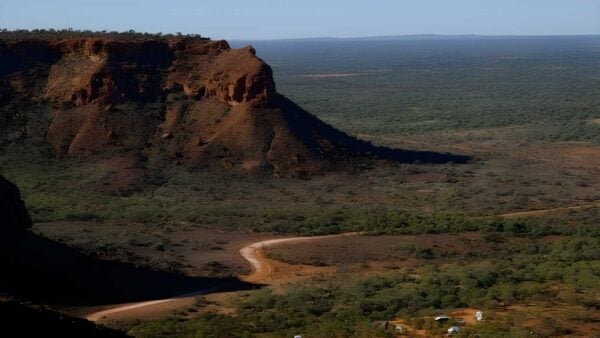
Kennedy Range National Park sits in the Gascoyne, about 150km east of Carnarvon and 15km north of Gascoyne Junction. The park and its proposed additions cover a very large area, centred on an isolated range that rises roughly 100 metres above the surrounding plain. That sudden lift from flat country to sandstone escarpment gives the whole place a strong sense of scale and separation.
The landscape is shaped by a vast sandstone plateau, around 75km long and 12 to 25km wide. These rocks were formed beneath an ancient sea, and the range is part of an older land surface that has survived while the country around it changed. Alongside its striking geology, the park is also valued for important springs, soaks and plant communities that stand out in this dry inland setting.
Highlights
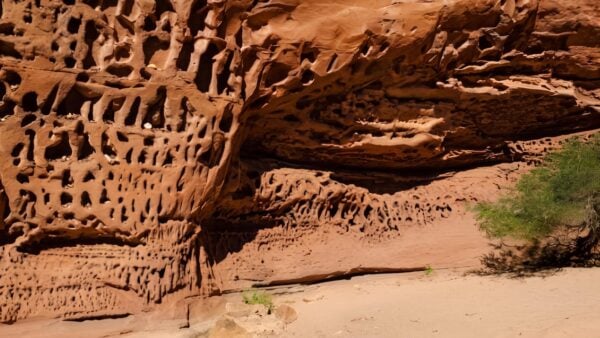
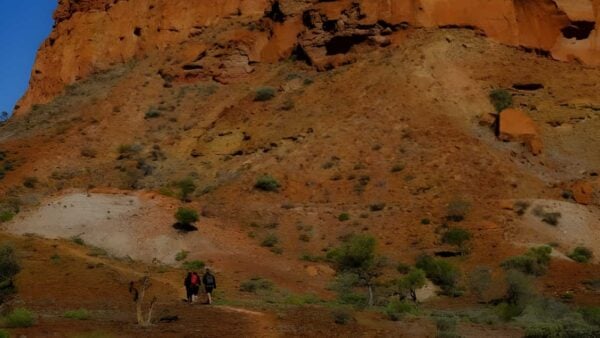
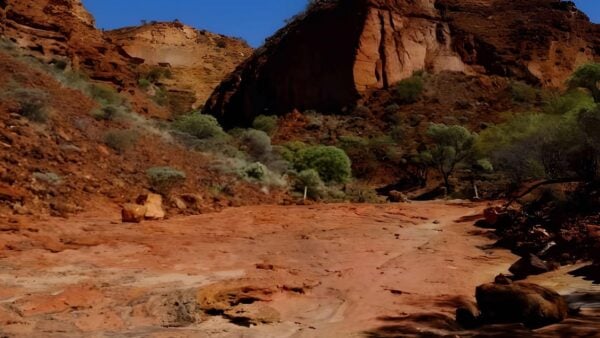
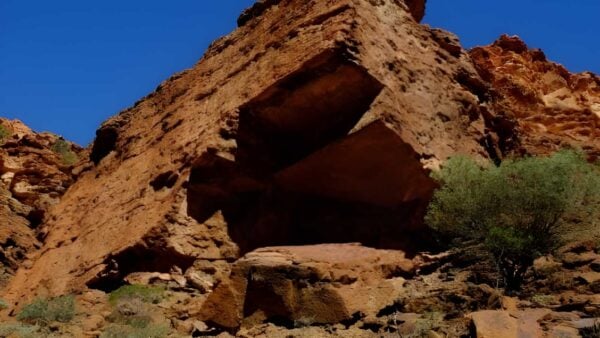
The defining feature here is the range itself: a long, flat-topped plateau edged by cliffs, broken gullies and deep-cut gorges. The eastern escarpment has a battlement-like profile, while the western side is marked by springs and permanent water at the base of the range. It is a place of red earth, sandstone walls and broad open space rather than dense forest or alpine scenery.
Geology is a big part of what makes Kennedy Range memorable. The rocks are richly fossiliferous, with marine fossils and rare semiprecious gemstone occurrences linked to the area’s ancient seabed history. On top of the range, red sand dunes sit over the plateau, adding another layer to a landscape that already feels older and more exposed than much of coastal Western Australia.
Best Time to Visit
Spring is usually the most rewarding season, especially after rain, when annual wildflowers spread across the open flats and bring colour to the red and ochre country. Winter rain is especially important for recharging soil moisture and supporting longer periods of plant growth, although irregular cyclonic rain can also trigger bursts of regeneration.
Outside those cooler months, the park remains impressive for its stark landforms and wide skies, but the seasonal shift in vegetation is one of the clearest changes in how the place feels from one time of year to the next.
Plants and Animals
The park protects a diverse mix of mostly arid flora, including species with southern affinities and some outliers more often associated with the south-west. On the plains and lower slopes, plants such as bardi bardi and snakewood are typical, and after rain the open country can fill with small daisies, mulla mullas and saltbush.
Water is scarce across much of the range, which makes the springs and creek systems especially important. Mooka Spring and its associated creek are recognised as a regionally significant aquatic system and an unusual ecological community. These wetter pockets support habitats that are quite different from the drier spinifex and shrubland country above and around them.
Culture and Heritage
Kennedy Range is known as Mundatharrda in the local Inggarda language, and Yinggarda people are recognised as the Traditional Owners of the park. The park is jointly managed with Yinggarda Aboriginal Corporation. Official material also notes that springs along the western side of the range were important places for Aboriginal people over a long period, with artefact scatters near some springs showing that long connection to the area.
Some parts of the park remain culturally important today. Honeycomb Gorge is identified as a culturally significant site, and the springs on the western side are also described as important places for Traditional Owners.
Find more places to explore…
Help expand the trail collection!
Know of an official trail not listed on Trail Hiking Australia? I’m focused on showcasing the best tracks managed by land managers, and I’d love your help! Sharing a trail adds to our community and helps others discover safe, new adventures.
Submit your trail here

