Sorry, no records were found. Please adjust your search criteria and try again.
Sorry, unable to load the Maps API.
Explore stunning hiking trails of Strzelecki National Park
Discover the diverse trails of Strzelecki National Park, Tasmania, offering hikes and walks for all skill levels and interests. Find your perfect adventure today.
Discover 3 hiking trails in Strzelecki National Park



Granite Peaks and Quiet Beaches on Flinders Island’s South-West Corner
Overview
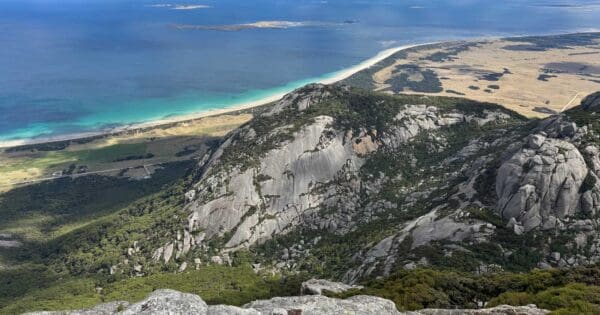
Strzelecki National Park protects the south-west corner of Flinders Island, in the Furneaux Group in Bass Strait. It is a compact but varied park, where steep granite mountains drop towards white-sand beaches, rocky headlands, coastal heath and blue gum forest. The park covers 4,216 hectares and centres on Mount Strzelecki, the highest point on Flinders Island at 756 metres.
What makes this place feel distinctive is the way mainland and Tasmanian natural communities meet here. That overlap gives the park an unusual mix of plant and animal life, shaped by its island setting and by the contrast between exposed peaks, sheltered coves and low coastal country.
Highlights
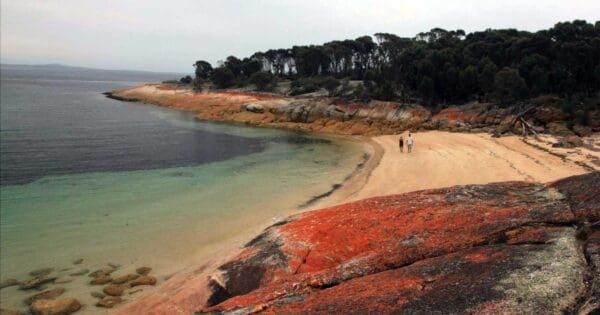
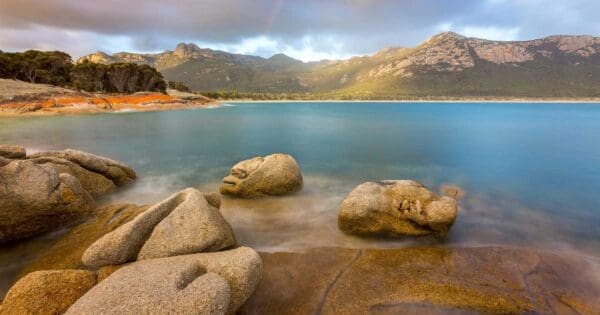
The defining feature is the granite massif of the Strzelecki Peaks, which rises sharply above the southern part of Flinders Island and can even be seen from mainland Tasmania in clear conditions. Around the coast, the scenery shifts to clear water, pale sand and lichen-covered granite boulders, especially around Trousers Point and the nearby headlands.
The park’s scenic appeal comes from that constant contrast. One moment it is all bare rock and big island views across Bass Strait, the next it is sheltered beaches, offshore islands and dense coastal vegetation pressed close to the shore. It is a landscape that feels open and exposed from above, then unexpectedly calm and enclosed at water level.
Best Time to Visit
Strzelecki National Park can be rewarding at any time of year, but the milder months from spring to autumn tend to show it at its most appealing. Spring is especially good for wildflowers and active birdlife, while the warmer months bring out the colour of the water and the bright contrast between granite, heath and sand.
Because this is an island park in Bass Strait, conditions can change quickly and the feel of the place is closely tied to weather. Calm, clear days make the coastal edges and summit views stand out most, while cooler months can be better if you prefer quieter, crisper conditions and less glare on the coast.
Plants and Animals
This park sits in a biogeographic meeting point, with plant and animal species from Tasmania and mainland Australia occurring together. Its vegetation ranges from coastal heath and tea-tree to Tasmanian blue gum forest, and there are localised rare and threatened plant communities around the northern headland of Trousers Point.
Birdlife is one of the park’s strengths. Flinders Island has recorded well over 100 bird species, and the park and surrounding island habitats support species such as Cape Barren geese, swift parrots, forty-spotted pardalotes, grey-tailed tattlers and hooded plovers. The island is also an important stopover for birds moving between mainland Australia and Tasmania. On land, commonly seen native mammals include wombats, Bennett’s wallabies, echidnas and pademelons, with long-nosed potoroos favouring denser cover.
Culture and Heritage
Strzelecki National Park contains recorded Aboriginal sites, including shell middens, stone artefact scatters and cave deposits. These places reflect a much longer history of Aboriginal occupation on Flinders Island, part of a cultural story that reaches back more than 42,000 years.
The park also carries a later layer of history through its name. It honours Count Paul Edmund Strzelecki, the Polish scientist and explorer who climbed peaks on Flinders Island in 1842. Before becoming a national park in 1967, the area had already been recognised for its scenic and wildlife values as a scenic reserve.
Find more places to explore…
Help expand the trail collection!
Know of an official trail not listed on Trail Hiking Australia? I’m focused on showcasing the best tracks managed by land managers, and I’d love your help! Sharing a trail adds to our community and helps others discover safe, new adventures.
Submit your trail here

