Sorry, no records were found. Please adjust your search criteria and try again.
Sorry, unable to load the Maps API.
Explore stunning hiking trails in the Pyrenees National Park
Discover the diverse trails in the Pyrenees National Park, Victoria, offering hikes and walks for all skill levels and interests. Find your perfect adventure today.
Discover 3 hiking trails in Pyrenees National Park
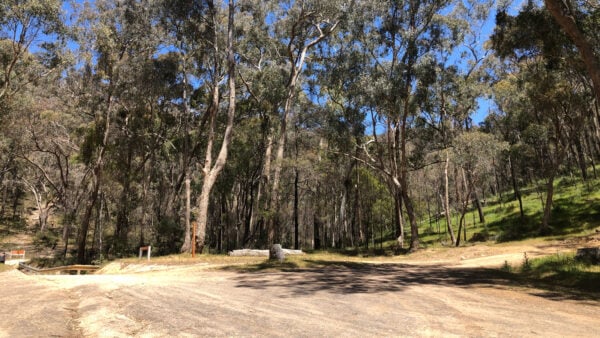
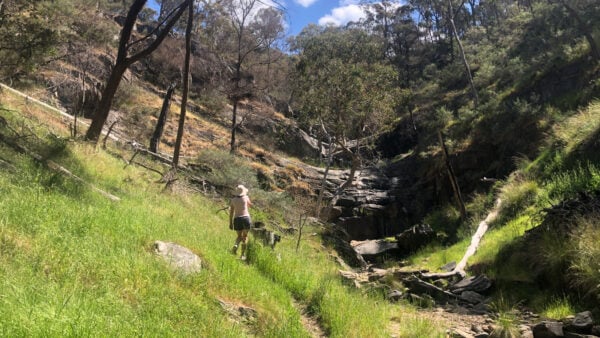

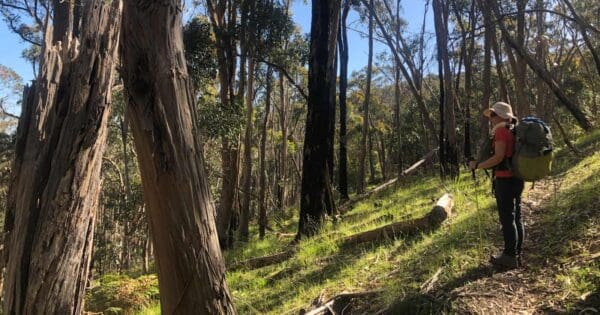

Forested Ridges and Goldfields Country in the Pyrenees
Overview
Pyrenees National Park protects around 15,000 hectares of rugged forested ranges west of Avoca in Victoria’s Central West. Created from approximately 10,600 hectares of the former Pyrenees State Forest and the former Landsborough and Landsborough Hill nature conservation reserves, the park brings together a large section of the Pyrenees Range under one national park.
The Pyrenees rise abruptly from the surrounding farming country, forming a long series of hills, ridges, valleys and rocky spurs between Avoca and Landsborough. Although the elevations are modest compared with Victoria’s alpine ranges, the steep slopes and folded terrain give parts of the park a surprisingly mountainous character.
Much of the range is formed from ancient sedimentary rocks, with soils, rainfall and aspect producing noticeable changes in vegetation across relatively short distances. Drier foothills support box and stringybark forests, while higher and more sheltered slopes carry taller Messmate and other mixed eucalypt forests. The result is a landscape that shifts from open woodland to denser forest as you climb through the range.
The national park also protects relatively undisturbed mixed-species forest with extensive patches of mature eucalypts. This is particularly important in the former Landsborough conservation reserves, where mature forest has long been recognised for its habitat value.
Highlights
The defining feature of Pyrenees National Park is its range country. Forested ridges rise above the plains, with steep gullies and rocky slopes creating an enclosed landscape within the hills and expansive views wherever the forest opens onto higher ground.
Lookouts and exposed ridges provide views across the Pyrenees foothills and surrounding agricultural country. The contrast is particularly striking on clear days, when heavily forested slopes fall away towards the broad plains around Avoca, Landsborough and the smaller settlements surrounding the range.
The vegetation adds considerably to the character of the landscape. Red Stringybark, Long-leaf Box and other dry-forest species are prominent on many of the steeper slopes, while Messmate and Blue Gum occur in more sheltered and higher-rainfall areas. Around the foothills, Box-Ironbark communities add another layer to the forest mosaic. Historical surveys of the Landsborough reserve recorded at least twelve species of eucalypt within a relatively compact area.
Spring wildflowers are another highlight. The Pyrenees have long been known for their diversity of flowering plants, with wattles, peas, orchids and other understorey species bringing colour to the forest floor after the cooler, wetter months.
Walking in Pyrenees National Park
The terrain of the Pyrenees makes it well suited to longer bushwalks. Many routes follow a combination of walking tracks, old forest roads and ridgelines, often linking valleys with higher points across the range.
Walking conditions can vary considerably. Some tracks follow relatively gentle forest roads, while others climb steep slopes or traverse rocky and uneven ground. The range can feel deceptively rugged once away from the main roads, with repeated climbs and descents adding considerably to the effort required over longer distances.
The Pyrenees Endurance Walk and other established routes through the range provide opportunities to experience the park at a larger scale, moving between dry foothill forest, sheltered valleys and elevated ridges. Nearby features such as Governors Rock also provide broad views across the surrounding landscape, although some sites associated with the wider Pyrenees walking network sit in adjoining reserves rather than within the national park itself.
The extensive network of former State Forest roads and tracks remains an important part of how people experience the park. These routes reflect the area’s long history of forestry, mining and other uses, and many now provide access for walking and other permitted recreation.
Best Time to Visit
Autumn through spring generally offers the most comfortable conditions for walking in Pyrenees National Park.
Spring is particularly rewarding. Cooler weather, fresh vegetation and flowering understorey plants make this one of the best times to explore the forest, while clear days provide excellent visibility from the higher ridges and lookouts.
Autumn also suits longer walks, with generally milder temperatures and drier tracks. The range can be very pleasant in winter, although exposed ridges may be cold and wet and some forest roads can become muddy after prolonged rain.
Summer brings hotter and considerably drier conditions. Many slopes are exposed to afternoon sun, water should not be assumed along walking routes, and bushfire risk is an important consideration throughout the warmer months. Check current weather, fire danger, track conditions and park closures before setting out.
Plants and Animals
Pyrenees National Park protects a diverse collection of forest and woodland communities across changing elevations, slopes and rainfall zones.
On the drier lower slopes, Box-Ironbark woodland grades into forests dominated by Red Stringybark and Long-leaf Box. More sheltered gullies and higher slopes support Blue Gum and Messmate forest, while other eucalypts occur throughout the range according to local conditions. The former Landsborough Nature Conservation Reserve was specifically protected because it contained examples of many of the major forest types found across the Pyrenees.
Large areas contain mature trees, which provide hollows and other habitat important to birds and arboreal mammals. Historical ecological assessments of the Landsborough forests highlighted their value for tree-nesting birds and mammals, including Brush-tailed Phascogales and koalas.
One of the park’s most significant plants is the Pyrenees Gum (Eucalyptus pyrenea), which has an extremely restricted natural distribution and is currently listed as Critically Endangered in Victoria. Protecting populations of this species was specifically identified as one of the conservation benefits of creating the national park.
The mix of mature forest, rocky slopes, gullies and open woodland also supports a broad range of woodland birds and other wildlife. Quiet walking routes away from busier access roads provide some of the best opportunities to experience this side of the park.
Culture and Heritage
Part of Pyrenees National Park lies on the Country of the Dja Dja Wurrung People, whose connection with the forests, waterways and ranges of central Victoria extends back thousands of years and continues today.
European settlement brought profound change to the Pyrenees during the nineteenth century, particularly following the discovery of gold. Mining began in the ranges west of Avoca in 1854, with workings quickly spreading through places such as Middle Creek and Fiddlers Creek. What later became Percydale developed into a substantial mining settlement, and the broader district was worked for gold as well as slate and other minerals.
Mining left a lasting physical imprint. Old diggings, shafts, water races, tracks and other relics survive throughout the wider Pyrenees landscape, particularly around the historic mining country near Avoca and Percydale. Some of the roads and tracks now used for recreation originated as access routes for mining, forestry and other industries.
Timber harvesting also shaped much of the former Pyrenees State Forest. Messmate and other commercial species were harvested from the higher and wetter parts of the range, while the more rugged or less productive areas retained extensive patches of mature forest. The different histories of the former State Forest and nature conservation reserves are still visible in variations in forest age, structure and track networks.
The creation of Pyrenees National Park brought much of this country together under a single protected area. The former Landsborough and Landsborough Hill nature conservation reserves contribute around 4,400 hectares, while approximately 10,600 hectares came from Pyrenees State Forest. Other parts of the former State Forest remain outside the national park, including areas retained for other public-land purposes.
A Rugged Range Above the Plains
What gives Pyrenees National Park its character is the contrast between the forested range and the open country surrounding it. From the plains, the Pyrenees appear as a long wooded rise. Once inside the park, that simple outline breaks into steep slopes, sheltered gullies, rocky ridges and mature forest.
The park protects some of the most intact forest remaining in this part of central Victoria, including habitat for threatened species and the highly restricted Pyrenees Gum. At the same time, mining tracks, old forest roads and other traces of the area’s working history remain woven through the landscape.
For walkers, the result is a park that rewards exploration beyond individual viewpoints. The changing forests, repeated ridgelines, spring wildflowers and long views over the surrounding plains give the Pyrenees a distinctive character that feels considerably more remote and rugged than its location near Avoca might suggest.
Find more places to explore…
Help expand the trail collection!
Know of an official trail not listed on Trail Hiking Australia? I’m focused on showcasing the best tracks managed by land managers, and I’d love your help! Sharing a trail adds to our community and helps others discover safe, new adventures.
Submit your trail here

