Sorry, no records were found. Please adjust your search criteria and try again.
Sorry, unable to load the Maps API.
Explore stunning hiking trails of Mount Crawford Forest Reserve
Discover the diverse trails of Mount Crawford Forest Reserve, South Australia, offering hikes and walks for all skill levels and interests. Find your perfect adventure today.
Discover 3 hiking trails in Mount Crawford Forest Reserve
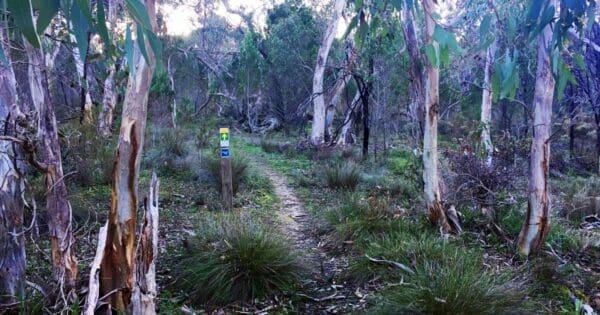




Where Pines Meet Native Bush in the Northern Mount Lofty Ranges
Overview
Mount Crawford Forest Reserve sits in the northern Mount Lofty Ranges, about 7 km from Williamstown and roughly an hour from Adelaide. It is a big, varied forest landscape rather than a single block of bush, stretching from near Williamstown towards Pewsey Vale and across to Cudlee Creek.
What makes the place distinctive is the mix of working forest and protected country. Alongside large areas of radiata pine plantation, there are thousands of hectares of native vegetation set aside for conservation, including a network of gazetted Native Forest Reserves. That combination gives Mount Crawford a different feel from a national park. You move through changing country, with plantation slopes, open native woodland, creek lines and pockets of older bush all part of the same reserve.
Highlights
The character of Mount Crawford comes from its rolling hill country and the contrast between dark pine stands and the lighter, more open textures of native forest. Rocky outcrops and ridgelines break up the forested slopes, and in places the land opens to broad views across the surrounding ranges.
The reserve also covers a wide sweep of country from the Adelaide Hills towards the southern Barossa, so the scenery shifts as you move through it. Some parts feel enclosed and cool beneath the pines, while others are more clearly shaped by exposed slopes, native bush and the undulating landforms of the Mount Lofty Ranges.
Best Time to Visit
Autumn through spring is usually when Mount Crawford feels most comfortable for walking, with cooler air, greener understorey and better conditions for spending time in the forest. Winter and early spring can be especially appealing when the hills are at their freshest and the contrast between plantation and native vegetation is at its strongest.
Summer can still be striking, but the landscape is drier and harsher in tone. If you are coming mainly for scenery and a more relaxed day out, the cooler months tend to show the reserve at its best.
Plants and Animals
Mount Crawford supports a substantial area of native vegetation protected for conservation, including eight Native Forest Reserves. These areas contain a rich mix of trees, shrubs and groundcovers, and they provide habitat for native birds, reptiles and mammals.
The broader South Para area that includes Mount Crawford is important for declining woodland birds because of its relatively large, continuous remnants of native vegetation. Yellow-tailed black-cockatoos are among the notable birds recorded here. At the same time, the plantation country is a major part of the landscape, dominated by radiata pine, so the reserve has a layered ecological character shaped by both native bush and long-established forestry.
Culture and Heritage
Mount Crawford Forest Reserve is on Kaurna and Peramangk Country. Its more recent history is closely tied to South Australia’s forestry development, with land first bought for forestry in 1909 and commercial plantings beginning in 1914 before expanding through the middle decades of the 20th century.
Find more places to explore…
Help expand the trail collection!
Know of an official trail not listed on Trail Hiking Australia? I’m focused on showcasing the best tracks managed by land managers, and I’d love your help! Sharing a trail adds to our community and helps others discover safe, new adventures.
Submit your trail here

