Sorry, no records were found. Please adjust your search criteria and try again.
Sorry, unable to load the Maps API.
Explore stunning hiking trails of Jacksons Cove Conservation Area
Discover the diverse trails of Jacksons Cove Conservation Area, Tasmania, offering hikes and walks for all skill levels and interests. Find your perfect adventure today.
Discover 1 hiking trail in Jacksons Cove Conservation Area
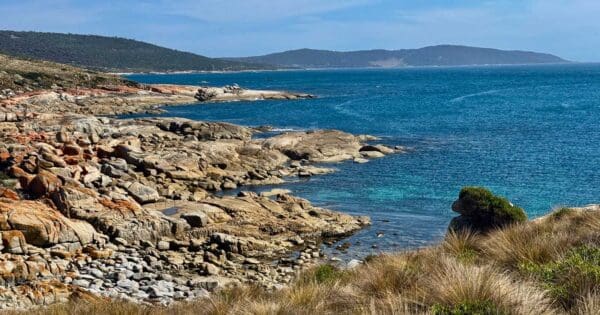

Granite Headlands and Quiet Northern Shores on Flinders Island
Overview
Jacksons Cove Conservation Area protects a small but varied stretch of the far north coast of Flinders Island in the Furneaux Group. The reserve was proclaimed in 2002 and covers about 241.89 hectares. It sits within a part of the island known for its exposed Bass Strait coastline, where low heath, rocky shores and small coves shape the landscape.
This is a coastal reserve that feels remote without being vast. Its scale is part of the appeal. Instead of long inland country, the focus here is on the meeting of granite, scrub and sea, with a compact reserve boundary wrapping around a distinctive section of shoreline.
Highlights
The main character of Jacksons Cove Conservation Area is its rugged northern coastline. Rocky headlands, small inlets and open views across Bass Strait give the place a raw, weather-shaped feel that is typical of Flinders Island’s outer coast.
The scenery comes from contrast more than height. Granite outcrops break up the shoreline, the sea shifts quickly with the light, and the vegetation stays low and wind-pruned close to the coast. It is the sort of landscape that feels spacious even in a relatively small reserve.
Best Time to Visit
Spring and the milder months of autumn are usually the most rewarding times to spend time here, when coastal vegetation is at its freshest and temperatures on Flinders Island are generally more comfortable for longer walks. Summer can also be appealing for clear sea views and longer daylight, though the coast is still very exposed to Bass Strait weather.
At any time of year, the place is best appreciated on a settled day, when the colour of the water and the shape of the headlands stand out most clearly.
Plants and Animals
Like much of Flinders Island’s coast, the reserve supports hardy coastal vegetation shaped by salt, wind and thin soils. Heathland and scrub are a strong part of the setting, especially around the more exposed sections near the shore.
Across the Furneaux islands, the overlap between Tasmanian and mainland plant and animal species is one of the region’s distinctive natural features, and coastal reserves such as this contribute to that mix. The area is best thought of as part of a broader island environment where shoreline habitat, low native vegetation and offshore conditions all influence what lives here.
Find more places to explore…
Help expand the trail collection!
Know of an official trail not listed on Trail Hiking Australia? I’m focused on showcasing the best tracks managed by land managers, and I’d love your help! Sharing a trail adds to our community and helps others discover safe, new adventures.
Submit your trail here

