Sorry, no records were found. Please adjust your search criteria and try again.
Sorry, unable to load the Maps API.
Explore stunning hiking trails of Darwin
Discover the diverse trails of Darwin, Northern Territory, offering hikes and walks for all skill levels and interests. Find your perfect adventure today.
Discover 1 hiking trail in Darwin
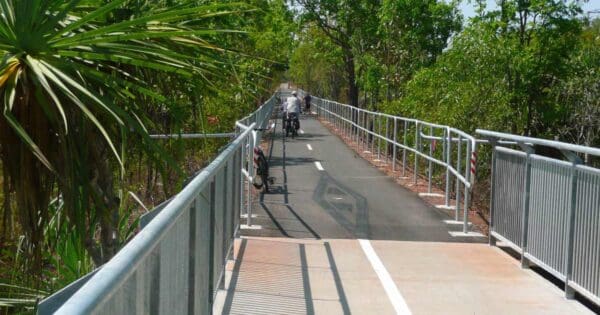

Mangroves, Mudflats and Harbour Views at Charles Darwin National Park
Overview
Charles Darwin National Park sits just a short distance from central Darwin on Frances Bay, protecting a surprisingly large pocket of coastal country within the city’s industrial edge. It combines mangrove-lined creeks, broad mudflats and higher woodland country on an escarpment, so the landscape changes quickly from tidal wetlands to dry, undulating ground.
What makes the park stand out is that mix of urban closeness and ecological value. It protects part of the Port Darwin wetland, a nationally significant wetland system, while also keeping intact bushland and shoreline habitats that are increasingly rare so close to Darwin’s built-up area.
Highlights
The park’s scenic character comes from contrast. Down on the coast, mangrove forests merge into wide tidal flats and winding inlets. Above them, the escarpment and low hills open up long views across Frances Bay, Darwin Harbour and the city skyline. It feels like a meeting point between harbour country and dry Top End woodland, with a much bigger sense of space than its location near the city suggests.
Another distinctive feature is the extent of the mangrove country. Port Darwin’s inlets, islands and bays support an unusually rich mangrove system, and the park protects part of that edge where creeklines, mudflats and coastal vegetation all come together.
Best Time to Visit
The drier months from around May to September are usually the most comfortable time to spend longer out in the park, with lower humidity and clearer conditions for harbour views. This is also when the contrast between the dry woodland and the tidal wetlands is especially easy to appreciate.
Earlier in the dry season can be greener after the rains, while the late dry often brings sharper visibility across the harbour. In the build-up and wet season, the park still has plenty of interest, but the heat and humidity can make it feel much more exposed.
Plants and Animals
This is one of Darwin’s more important urban conservation areas because it protects both coastal wetland habitats and woodland communities. The mangroves are a major feature, with 36 of the Northern Territory’s 51 mangrove species recorded in Port Darwin’s wetland system. On the higher ground, open woodland and grassland communities add a very different habitat type within the same park.
The mudflats and mangroves support rich birdlife, especially around low tide. The area is recognised as valuable feeding ground for waders, and species such as the chestnut rail and beach stone-curlew have been singled out for special management attention. The park’s combination of tidal habitat, woodland and creek systems gives it a biodiversity value that is much greater than its urban setting might suggest.
Culture and Heritage
Charles Darwin National Park holds both Aboriginal and wartime heritage. Shell middens in and around the mangrove fringes show Aboriginal associations with the area going back thousands of years, and the park page notes that the Larrakia people maintain their connections and speak for this land.
More recent history is layered through the same landscape. The area formed part of a World War II military ordnance complex, and a number of bunkers and related sites remain within the park, linking it closely to Darwin’s role in the Pacific War.
Find more places to explore…
Help expand the trail collection!
Know of an official trail not listed on Trail Hiking Australia? I’m focused on showcasing the best tracks managed by land managers, and I’d love your help! Sharing a trail adds to our community and helps others discover safe, new adventures.
Submit your trail here

