Granite Ridges, Red Gum Flats and Alpine Views at Warby-Ovens
Overview
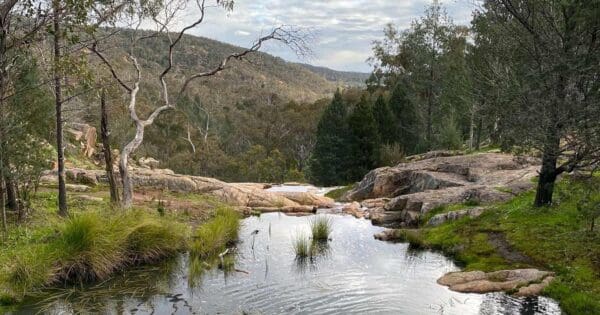
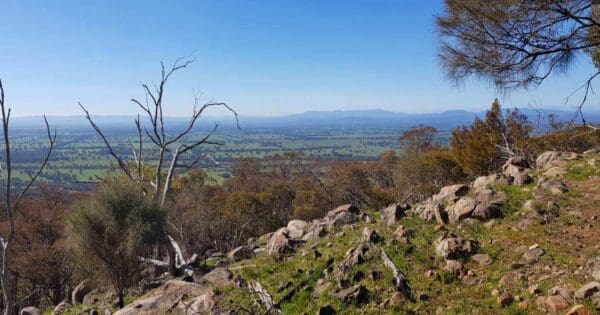
Warby-Ovens National Park brings together two quite different landscapes in north-east Victoria, around 10 km west of Wangaratta and about 240 km north-east of Melbourne. One part is the Warby Range, with granite hills, dry forest and broad views towards the Victorian Alps. The other follows the lower Ovens River, where River Red Gum forest, woodlands and wetlands create a greener, flatter contrast to the ridges.
That mix gives the park a character that feels broader than its size suggests. It sits between the Alps and the Murray Valley, protecting some of Victoria’s most significant bushland and linking drier inland country with riverine environments.
Highlights
The big draw here is the contrast between the rocky Warby hills and the lower Ovens floodplain. On the range, granite outcrops, steep forested slopes and open lookout points give the park its strong scenic identity. In clear weather, the higher lookouts look across to the Victorian Alps, and in winter those distant peaks can carry snow.
Along the river, the mood changes completely. River Red Gum forest and wetlands soften the landscape, with broad flats and slower water shaping a quieter, more sheltered side of the park. Together, the ridges and river country make Warby-Ovens feel more varied than many single-landform parks.
Best Time to Visit
Winter and spring are usually the most rewarding times to be here. Winter rain brings more life back into the Warby Range, with creeks and falls more likely to flow, winter-flowering eucalypts drawing in birds, and clearer alpine outlooks on cold days. Spring adds orchids, grevilleas, Common Fringe-myrtle and Nodding Blue-lily through the drier country, while floodwaters can revive wetlands along the lower Ovens.
Autumn can also be a good balance, especially as the heat begins to ease. Summer suits time by the river more than time in the hills, as the range can become hot and the waterfalls are often dry.
Plants and Animals
Warby-Ovens is known for the quality of its Box-Ironbark forest as well as its Riverine Forest and Woodlands, with the park recognised for holding some of Victoria’s best examples of both. Across the broader river corridor landscape, the vegetation includes dry forest, woodlands, freshwater wetlands and saline wetlands, which helps explain why the park supports such a wide spread of habitats in one area.
Birdlife is a strong part of the park’s character. Winter-flowering Mugga Ironbark and other eucalypts attract nectar-feeding birds in the drier forest, while the wetlands and river country draw waterbirds when conditions are right. The park is also noted as a place to look for species such as Powerful Owl, Barking Owl and Peregrine Falcon.
Culture and Heritage
Warby-Ovens National Park is part of an Aboriginal cultural landscape in the traditional Country of the Yorta Yorta Peoples. That connection is recognised as ongoing, with Country here understood as a living cultural landscape rather than a place separated into natural and historic parts.