Sorry, no records were found. Please adjust your search criteria and try again.
Sorry, unable to load the Maps API.
Explore stunning hiking trails of The Pines Conservation Reserve
Discover the diverse trails of The Pines Conservation Reserve, South Australia, offering hikes and walks for all skill levels and interests. Find your perfect adventure today.
Discover 2 hiking trails in The Pines Conservation Reserve
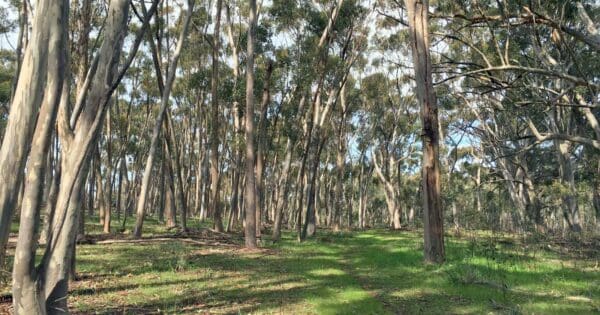


A Community Reserve on the Edge of Kapunda
Overview
The Pines Conservation Reserve is a small bushland reserve near Kapunda in South Australia’s Mid North, managed locally as a place for conservation and quiet recreation. In 2022 it was formally renamed from The Pines Recreation Reserve to The Pines Conservation Reserve, which better reflects its role as a protected natural area rather than simply an open space for day use.
At just over 29 hectares, it is not a vast reserve, but it has enough room to feel distinctly separate from the surrounding farming country. Its value comes from that contrast: a patch of remnant and planted vegetation that supports local biodiversity close to town.
Highlights
The character of The Pines comes from its mix of open spaces and wooded areas, giving the reserve a varied feel for a relatively compact site. It sits in gently undulating country near Kapunda, with a more intimate landscape than the big ranges parks further east and north.
What stands out most is the sense of a cared-for local reserve with natural bushland character. The setting is less about dramatic landforms and more about the quiet appeal of a green pocket in a largely cleared rural district.
Best Time to Visit
The cooler months are generally the most pleasant time to spend time here, when temperatures around the Mid North are milder and the reserve’s vegetation is usually at its freshest. Spring can be especially rewarding as bird activity picks up and the landscape feels greener after winter rain.
In summer, the reserve can still be appealing early or late in the day, but the broader district is typically hot and dry, so the experience is shaped more by seasonal conditions than by any alpine or coastal climate effect.
Plants and Animals
The reserve supports a mix of local endemic vegetation, introduced native species and exotic plants. That combination makes it ecologically varied, even as it also creates ongoing restoration work to improve the condition of the site.
Wildlife recorded here includes birds, bats, mammals, reptiles, amphibians and insects. Birdwatching is one of the reserve’s strongest natural drawcards, and the site’s patchwork of vegetation gives shelter and habitat to a wider range of species than you might expect from its modest size.
Culture and Heritage
The place also has a layered local history. Earlier references to the reserve link it with a reservoir, forest and recreation area, reflecting how the site has changed over time from a more utilitarian landscape into one with a stronger conservation focus today.
Find more places to explore…
Help expand the trail collection!
Know of an official trail not listed on Trail Hiking Australia? I’m focused on showcasing the best tracks managed by land managers, and I’d love your help! Sharing a trail adds to our community and helps others discover safe, new adventures.
Submit your trail here

