Sorry, no records were found. Please adjust your search criteria and try again.
Sorry, unable to load the Maps API.
Explore stunning hiking trails of Porter Scrub Conservation Park
Discover the diverse trails of Porter Scrub Conservation Park, South Australia, offering hikes and walks for all skill levels and interests. Find your perfect adventure today.
Discover 1 hiking trail in Porter Scrub Conservation Park
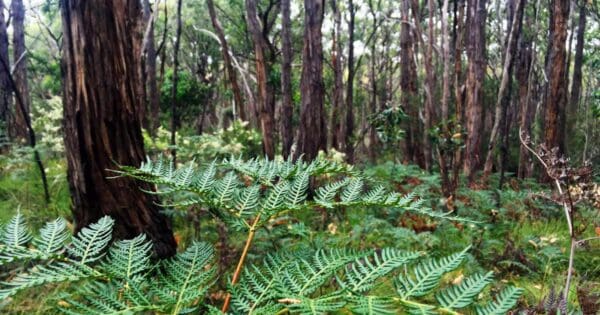

Remnant Forest and Creek Valley Country in the Central Mount Lofty Ranges
Overview
Porter Scrub Conservation Park protects 104 hectares of remnant forest and woodland at Kenton Valley, in the Central Mount Lofty Ranges, about 30 kilometres north-east of Adelaide. In a part of the Adelaide Hills where native vegetation has been heavily fragmented, this patch of intact bushland stands out as an important refuge and a stronghold for locally uncommon habitats.
The park sits on undulating to hilly ground around a central valley formed by Howard Creek, with the headwaters of the creek running through the reserve. Its value lies less in big landmark scenery and more in the quality of the bush itself: a healthy mix of forest, woodland and grassy understorey that has survived in a landscape otherwise shaped by clearing and agriculture.
Highlights
The character of Porter Scrub comes from its folded hillsides, shallow valleys and the quiet change between ridge and creek-flat vegetation. Howard Creek gives the park a defined central spine, and in winter some of the lower ground becomes seasonally boggy, adding another layer to the landscape.
There is also a strong sense of variation in a relatively small area. Messmate Stringybark woodland dominates much of the park, while patches of Candlebark Gum open forest and woodland sit in the upland valleys and flatter ground. That mix creates a more textured, layered landscape than you might expect from its size.
Best Time to Visit
The cooler months are usually the most appealing time to be here, when the forest feels greener and the creek valley is at its most alive. Winter and spring also tend to show the contrast between the drier slopes and the moister flats more clearly.
Spring is especially rewarding if you enjoy smaller botanical detail rather than broad floral displays, with native grasses, sedges and orchids adding interest through the understorey.
Plants and Animals
Porter Scrub is known for the diversity packed into a modest area. At least 194 native plant species have been recorded here, including 12 plant species of conservation significance. Among them are Clover Glycine, which is nationally vulnerable, and plants such as Twisted Sun-orchid, Shy Caladenia and Candlebark Gum.
Six distinct vegetation associations have been identified in the park. The largest is intact Messmate Stringybark woodland and tall woodland, but there are also patches of state-significant Candlebark Gum open forest, Pink Gum low woodland and River Red Gum woodland, along with grassy woodland communities that have been widely cleared elsewhere in the region.
The park also provides habitat for a range of native fauna, including species of conservation significance. Birds recorded here include the Yellow-tailed Black-cockatoo, and the habitat is considered suitable for threatened species such as the Southern Brown Bandicoot and the Spotted Quail-thrush.
Culture and Heritage
The land within Porter Scrub Conservation Park is traditionally associated with the Peramangk people of the Mount Barker area. Official records for the park also note that its Aboriginal heritage has not been fully researched, so the cultural history that is publicly documented for this specific place remains incomplete.
More recent history has also left visible traces in the landscape. After colonial settlement the area was used for grazing, timber extraction and talc mining, and old mine shafts and large tree stumps still mark that period.
Find more places to explore…
Help expand the trail collection!
Know of an official trail not listed on Trail Hiking Australia? I’m focused on showcasing the best tracks managed by land managers, and I’d love your help! Sharing a trail adds to our community and helps others discover safe, new adventures.
Submit your trail here

